
.png)


The siren fades, the hoses drain, and the public breathes a sigh of relief, but the crew that ran toward the fire carries something quieter home: trauma, loss, and repeated exposure to life-or-death situations take a toll not just on the body, but on the mind.
In a single year, more firefighters lose their lives to suicide than to the flames they battle; estimates show 100 to 200 suicides annually, often double the line-of-duty deaths. Anyone who has witnessed firsthand the toll of this valiant job knows that it is a devastating reality. Firefighters risk their lives to save others, but who is protecting theirs from the unseen wounds?
With enhanced focus on fire department peer support programs and firefighter mental health training, that is where firefighter behavioral health comes into play. Leading the way are programs like the Firefighter Behavioral Health Alliance (FBHA), which provide hope and useful resources.
Understanding Firefighter Behavioral Health
Firefighters are trained to run toward danger when everyone else runs away. However, despite their bravery, they deal with particular mental health issues, such as Firefighters facing chronic stress that can lead to burnout (emotional exhaustion and fatigue), as well as trauma that can result in PTSD or survivor’s guilt. These are distinct but overlapping risks.
These challenges are unique. Irregular hours disrupt sleep and family life, leading to isolation, while the "hero" culture often discourages vulnerability. Research suggests that PTSD affects a significant portion of firefighters, some studies estimate up to 30%, which is several times higher than the general population. Many people experience burnout, and its symptoms, such as emotional exhaustion, are severe.
Addressing firefighter behavioral health is essential for both team safety and personal well-being.A resilient firefighter lowers risks for everyone by making wiser choices under pressure. Ignoring it? That leads to higher absenteeism, turnover, and tragedy.
Firefighter Behavioral Health Alliance (FBHA)
The Firefighter Behavioral Health Alliance (FBHA) has been at the forefront, dedicated to saving lives through education and support. Founded in 2010, its mission is to collaborate, develop, and implement behavioral health awareness, prevention, intervention, and post-crisis strategies for firefighters and their families. FBHA's vision? A fire service where mental health is openly addressed, reducing stigma and suicides
FBHA offers:
● Workshops and training on behavioral health and suicide prevention.
● Peer support development to help departments build their own firefighters.
● Confidential resources for firefighters and their families.
FBHA partners with departments to offer specialized programs and offers resources like family support and chaplain training. For instance, FBHA collaborates with entities such as Weyerhaeuser to extend mental health resources to wildland firefighters, with a focus on prevention in high-risk areas. Through these efforts, FBHA empowers fire departments to build robust firefighter behavioral health initiatives, fostering a culture of care. (PR Newswire)
Fire Department Peer Support Programs
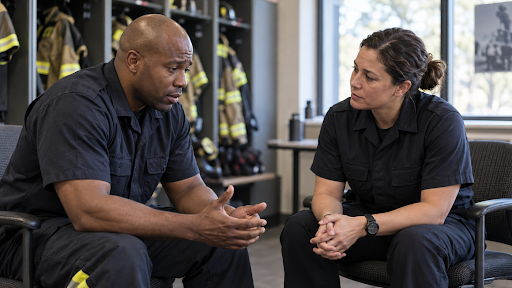
Fire department peer support programs are informal networks where trained firefighters offer confidential, non-clinical assistance to those who are experiencing stress or trauma. In contrast to traditional therapy, these programs leverage shared experiences; peers "get it" because they've been there, making conversations feel less intimidating.
The benefits are peer support reduces psychological distress by up to 40% among first responders, building resilience and unity. It lowers stigma, encourages early help-seeking, and is more accessible than formal counseling. It is also protective against PTSD, and its availability improves mental health in general.
Real-life success stories abound. In Minnesota's MnFIRE program, peer supporters helped colleagues navigate emotional crises, leading to better retention and morale.
Another example: A fire department's peer team assisted after a critical incident, resulting in faster recovery and stronger team bonds. These stories highlight how fire department peer support programs turn vulnerability into strength.
Firefighter Mental Health Training
Firefighter mental health training is crucial because the job's demands can erode resilience without tools to cope. It teaches recognition of stress signs, self-care, and support strategies, preventing escalation to burnout or PTSD.
Key training areas include:
● Stress management and resilience building
● Crisis response and suicide prevention
● Recognizing behavioral health warning signs in peers
Benefits are improved mental health literacy, reduced stigma, and better help-seeking leading to higher job satisfaction and performance. Trained wellness support for firefighters show enhanced resilience, fewer injuries, and stronger team dynamics, ultimately saving lives on and off the job.
Building a Culture of Mental Wellness in Fire Departments
Culture is everything. Fire departments that normalize conversations about mental health create safer, stronger teams. Steps toward this include:
● Leadership support:
Chiefs and senior officers must model openness about mental wellness. Organizational psychologists call this psychological safety, when leaders demonstrate fairness and openness, firefighters are far more likely to speak up and seek support.
● Policy integration:
Making peer support and training part of standard operating procedures.
● Ongoing education:
Regular refreshers to keep mental health at the forefront.
Leadership plays a crucial role in fostering cultures where asking for assistance is seen as a strength by emphasizing wellness. Integrate FBHA workshops and fire department peer support programs into routines, such as post-incident debriefs. This fosters a supportive environment where firefighters flourish, normalizes conversations, and lowers burnout.
Resources & Support Networks
For firefighters and families seeking support, these organizations provide life-saving resources:
● Firefighter Behavioral Health Alliance (FBHA): Offers workshops and a suicide hotline at 1-888-731-FIRE
● National Suicide Prevention Lifeline: Dial 988 for 24/7 support
● IAFF Center of Excellence: Specialized in firefighter and paramedic behavioral health
● NVFC Share the Load: Peer support programs and training for volunteer and combination departments.
● National Fallen Firefighters / FireHero resources: Behavioral-health toolkits and family supports.
Encourage exploring firefighter mental health training through these networks for proactive help. No firefighter or family member should feel they must face these struggles alone; help is available and accessible.
Conclusion
The greatest battles firefighters fight aren’t always against flames, they’re against the silent weight of trauma, stress, and grief. By embracing the resources of the Firefighter Behavioral Health Alliance, investing in fire department peer support programs, and prioritizing firefighter mental health training, departments can protect their most valuable resource: their people.
The time to act is now. Departments and firefighters can take the first step today by engaging in peer support and professional training to ensure long-term wellness.
FAQs
What is the Firefighter Behavioral Health Alliance?
The Firefighter Behavioral Health Alliance (FBHA) is a organization dedicated to raising awareness, providing training, and preventing firefighter and EMS suicides.
Why do firefighters need peer support programs?
Peer programs connect firefighters with colleagues who understand the unique challenges of the job, reducing stigma and providing early emotional support.
How does mental health training benefit fire departments?
It builds resilience, equips firefighters to manage stress, improves teamwork, and helps identify mental health concerns early.
What resources are available for firefighter families?
Families can access FBHA resources, peer support groups, and national hotlines like 988 for immediate help.
How can fire departments start a peer support program?
Departments can partner with FBHA, train selected firefighters in peer support, and integrate programs into official wellness policies.
References
1. Sounding the Alarm: Firefighters Remain More Likely to Die by Suicide Than On Duty (2023) Forbes
2. Firefighter Behavioral Health Alliance, Official Website (FBHA).
3. Stanley, I. H., Hom, M. A., Joiner, T. E. (2022), Mental Health in Firefighters: Prevalence, Risk Factors, and Interventions, Frontiers in Psychology (PMC).
4. Weyerhaeuser & Firefighter Behavioral Health Alliance Partner for Third Year to Provide Mental Health Resources for Wildland Firefighters (2024) (PR Newswire)
5. MnFIRE Initiative, Peer Support Resources. MnFIRE Initiative
6. 988 Suicide & Crisis Lifeline, Official Website. 988lifeline
7. International Association of Fire Fighters, Center of Excellence Helping Transform the Fire Service (2023). (IAFF)
8. National Volunteer Fire Council , Share the Load Program. (NVFC)
9. National Fallen Firefighters Foundation (NFFF), Firefighter Mental Health

.png)





.png)