
.png)


In the competitive landscape of modern business, the greatest asset an organization possesses doesn't appear on a balance sheet; it resides in the cognitive functioning, emotional regulation, psychological safety, and vitality of its people. For years, employee assistance programs (EAPs) and annual wellness challenges were treated as necessary, yet often peripheral, expenses.
It's 2025, and nearly 85% of U.S. workers are grappling with burnout or exhaustion, leading 47% to take time off for mental health issues. This isn't just a statistic; it's a wake-up call echoing through boardrooms and break rooms alike, reflecting sustained occupational stress, emotional exhaustion, and diminished recovery capacity rather than short-term strain. (National Safety Council)
As HR leaders and corporate executives navigate complex global challenges, they recognize a singular truth: employee mental health and resilience are the underlying psychological mechanisms that support consistent decision-making, adaptability, and business performance.
We are moving beyond simple "perks" and embracing a holistic strategy. This shift is driving a mandatory conversation about promoting well-being in the workplace, one that integrates personalized care with comprehensive cultural initiatives, including prevention, early intervention, and trauma-informed organizational practices.
This piece will define the modern standard for corporate health, detailing why generic solutions are failing, how to implement truly effective corporate well-being programs, and how MyOmnia Health provides the necessary depth and expertise to transform your organizational culture.

What Is Specialized Support?
Specialized support in a corporate wellness setting goes beyond surface-level well-being initiatives. It refers to personalized, expert-led services that respond to the real mental, emotional, and psychological needs of employees, as assessed by qualified professionals, not just their job roles. In a corporate setting, specialized support looks may include:
- Confidential mental health counselling
- Crisis and trauma response services
- Employee Assistance Programs (EAP)
- One-to-one coaching for stress, resilience, or performance
- Manager and leadership consultation and support
These services ensure employees have access to timely, professional help when challenges arise, whether those challenges are work-related or personal.
Employees experience stress, burnout, and life pressures differently based on their roles, personal circumstances, and environments. Generic wellness initiatives such as a single workshop or app often fail, when applied in isolation, to meet these varied needs. Specialized support fills this gap by offering flexible, individualized pathways that meet people where they are, without assuming uniform coping capacity or access to resources.
Specialized support in high-performing teams builds resilience by providing tools for immediate relief and long-term growth. Without it, unaddressed issues can snowball into cognitive overload, emotional withdrawal, and impaired judgment, leading to decreased focus and higher absenteeism. By integrating specialized support, organizations show they truly care, creating a foundation for stronger employee mental health.
What Are Corporate Well-being Programs?
Corporate well-being programs are structured, organization-wide initiatives designed to support and improve employees’ physical, mental, emotional, and psychological health. Their purpose goes beyond offering occasional wellness activities, and they aim to create sustainable systems that help employees cope with stress, build resilience, and perform at their best over time.
Common Components of Corporate Well-being Programs
Effective corporate wellbeing programs are multi-layered and adaptable. They often include:
- Wellness and resilience training sessions
- Stress management and burnout prevention initiatives
- Mental health tools and digital well-being resources
- Well-being assessments and surveys to identify risks and needs
- Access to counselling, coaching, and EAP services
- Leadership and management education on well-being
According to Corporate Wellness Magazine, corporate well-being programs offer significant benefits for both employees and organizations. They improve physical and mental health, enhance engagement and retention, and boost productivity by creating supportive, resilient work environments. Over time, they also reduce absenteeism and lower healthcare costs, particularly when programs are sustained, leadership-supported, and integrated with mental health services rather than delivered as stand-alone initiatives.
Why Corporate Well-being Programs Are Becoming the Standard
As workplaces grow more complex and demands increase, well-being can no longer be treated as a secondary concern. Modern organizations understand that reactive approaches are costly and ineffective. Instead, proactive well-being strategies help prevent burnout, support mental health, and create environments where people can thrive.
This shift has made corporate well-being programs a standard feature of forward-thinking workplaces, not as a trend, but as a long-term investment in people, performance, and sustainability.
The Importance of Promoting Well-being in the Workplace
Promoting well-being in the workplace is essential for boosting morale, engagement, and productivity. When employees feel supported mentally, emotionally, and physically, they are more motivated, focused, and likely to stay with the organization. A strong culture of well-being also fosters trust, collaboration, and open communication across teams.
Proactive strategies like stress management, resilience training, and access to specialized support prevent burnout and reduce absenteeism. Leadership plays a key role by modelling empathy, setting realistic performance expectations, and responding early to signs of psychological strain, helping embed well-being into everyday work. Investing in employee well-being creates a healthier, high-performing workforce and a sustainable, thriving organization.
Connecting Specialized Support With Corporate Well-being Programs
Integrating specialized support into corporate well-being programs ensures that employee needs are met at both the individual and organizational levels. Well-being programs provide structured initiatives like wellness training, stress management, and assessments; specialized support, by contrast, provides individualized, confidential intervention when employees experience elevated psychological need.
When organizations link individual care with broader initiatives, they create lasting benefits. Employees develop healthier habits, communicate more openly, and engage consistently with wellness offerings. At the same time, the workplace culture becomes more supportive, fostering trust, collaboration, and resilience.
By connecting specialized support with corporate programs, companies can move beyond one-size-fits-all solutions and build environments where both employees and the organization thrive.
How MyOmnia Health Helps Organizations
MyOmnia Health exemplifies how organizations can integrate specialized support with robust well-being initiatives to build healthier, more resilient teams. Their solutions span:
Tailored Well-Being Programs
Programs tailored to organizational cultures and individual needs, helping teams tackle stress, burnout, and emotional fatigue with evidence-based psychological and behavioral strategies.
Workplace Wellness Services
Custom services focused on stress reduction, engagement enhancement, and holistic employee wellness that align with organizational goals.
Wholeness-Based Consulting
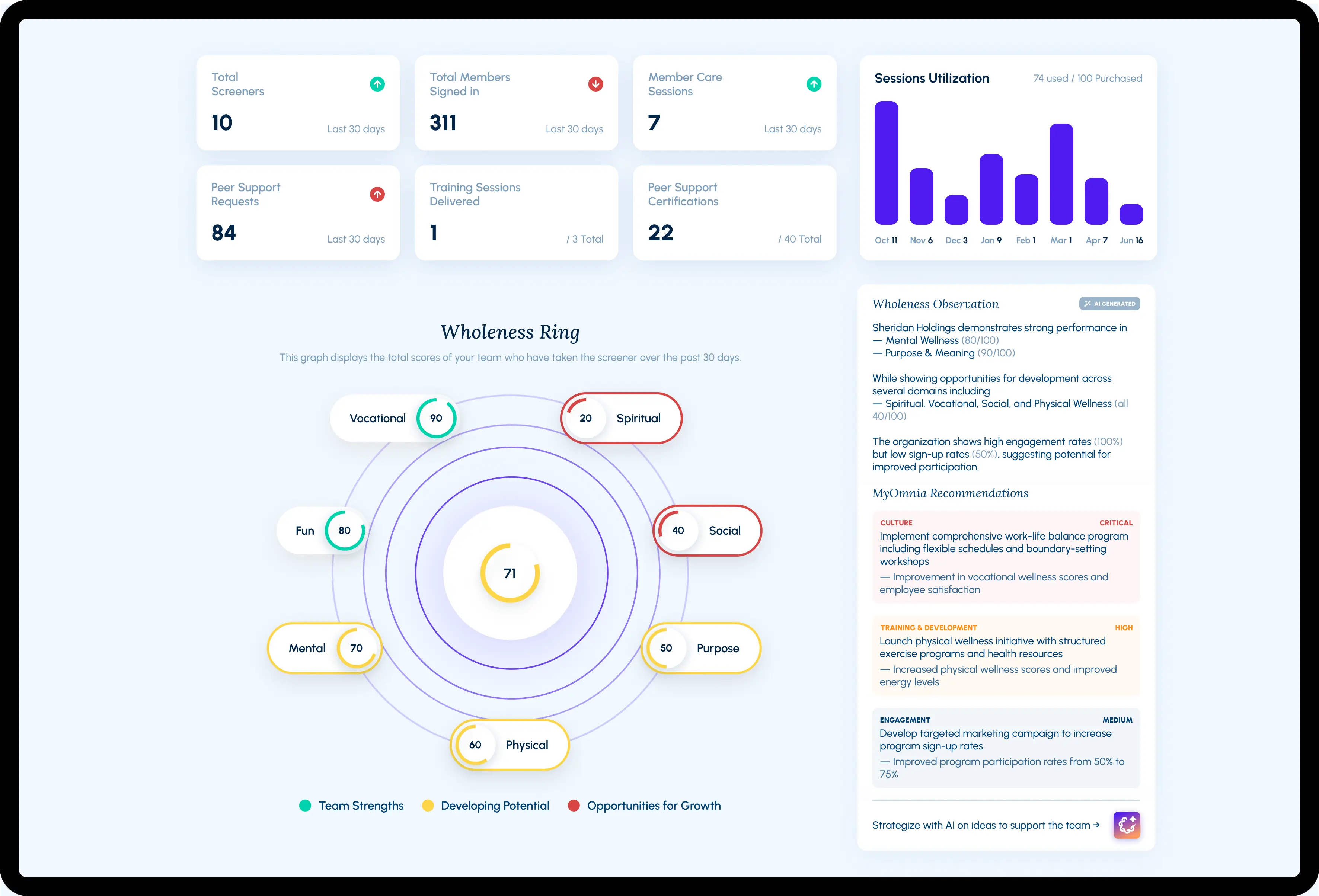
Consulting that uses data and human insight to translate well-being assessments into action plans, influencing both culture and performance.
Employee Assistance Program (EAP)

Confidential counselling, trauma support, performance coaching, and crisis intervention designed to be accessible, stigma-free, and impactful, with outcomes monitored for clinical relevance and functional improvement.
MyOmnia seamlessly integrates specialized support into corporate well-being programs via our Prevention and Wholeness Model. This proactive framework fortifies resilience, sustains performance, and measurably improves team culture. Whether you're in healthcare, tech, or education, our solutions adapt to your needs, promoting well-being in the workplace with empathy and expertise.
Best Practices for Promoting Well-Being in the Workplace
Building sustainable well-being takes intention. Here are actionable strategies HR leaders and executives can adopt:
✔ Offer Accessible Specialized Support Channels
Ensure employees can access help easily, whether through digital platforms, in-person sessions, or phone/video options.
✔ Conduct Regular Well-Being Surveys
Surveys uncover hidden stressors and help tailor well-being initiatives based on real data.
✔ Build a Culture of Transparency
Encourage open conversations about mental health and support-seeking behaviors without stigma.
✔ Normalize EAP Usage
Communicate the benefits and confidentiality of EAP services so employees feel comfortable using them.
✔ Train Leaders in Empathy
Equipping managers with skills to recognize burnout signs and respond with compassionate leadership while maintaining appropriate boundaries and referral pathways matters.
✔ Support Balanced Workloads & Recovery
Encourage breaks, flexible scheduling, and mindfulness practices to boost resilience and prevent burnout.
Conclusion
In a world where 33% of global employees are thriving while others struggle, specialized support and corporate well-being programs stand out as game-changers. They matter because they build healthier, more resilient workplaces, leading to long-term benefits like higher productivity, better retention, and a positive culture. By prioritizing employee mental health through proactive strategies, organizations don't just survive, but they excel.
Ready to transform your workplace? Partner with MyOmnia Health for holistic solutions that integrate specialized support into your corporate wellbeing programs. Visit MyOmnia Health today to start building a thriving team.
References
- National Safety Council. (n.d.). Prioritizing employee mental health. National Safety Council. https://www.nsc.org/workplace/safety-topics/employee-mental-health?srsltid=AfmBOor-yDWMbZkQzN2Ip6uIIMOj2RjG_Xr_-bGxxMnmof_IMKiR2e_P
- Corporate Wellness Magazine. (n.d.). The benefits of workplace wellness programs. Corporate Wellness Magazine. https://www.corporatewellnessmagazine.com/article/the-benefits-of-workplace-wellness-programs
- Gallup. (n.d.). State of the global workplace. Gallup. https://www.gallup.com/workplace/349484/state-of-the-global-workplace.aspx
FAQs
Q1:What is specialized support in a corporate setting?
Specialized support involves personalized services like EAP counseling, crisis intervention, and coaching tailored to individual employee needs, going beyond general wellness advice.
Q2:Why are corporate wellbeing programs essential?
They improve employee performance, reduce stress, and boost retention by addressing physical, mental, and emotional health, leading to a more productive workforce.
Q3: What’s the difference between specialized support and corporate wellbeing programs?
Specialized support focuses on personalized care (like counselling and tailored interventions), while corporate wellbeing programs are structured organizational initiatives that promote health across teams.
Q4:How can organizations start promoting well-being in the workplace?
Begin with surveys to assess needs, then implement EAP access, wellness training, and leadership empathy programs for a comprehensive approach.
Q5:What makes MyOmnia Health's EAP different?
Our EAP offers immediate, trauma-trained support with proven results, like symptom reduction in under four sessions, integrated into broader wholeness consulting.
Q6:How do specialized support and corporate wellbeing programs work together?
Specialized support personalizes care within broader programs, creating synergistic effects that enhance resilience and long-term employee wellness.

.png)




.png)