
.png)



A first responder should not have to reach a breaking point before support becomes available.
Yet many wellness systems are designed around that exact moment. Assistance is offered after a critical incident, when symptoms become visible, or when someone finally admits they are struggling. Crisis response matters, but it cannot carry the full weight of workforce wellness.
First responders regularly work long hours, witness human suffering, make high-stakes decisions, and operate in environments where mistakes can have serious consequences. These pressures do not always produce an immediate crisis. More often, stress accumulates quietly through disrupted sleep, difficult calls, staffing shortages, public scrutiny, administrative demands, and repeated exposure to trauma.
A proactive wellness strategy addresses those pressures before they significantly affect a responder’s health, relationships, judgment, or ability to serve.
Crisis Support Is Necessary, but It Is Not Prevention
Employee assistance programs, crisis hotlines, critical incident resources, and clinical referrals are essential. However, their presence does not automatically create a healthy workforce.
Responders may not use available services if they are unsure about confidentiality, fear career consequences, question whether a clinician understands their work, or believe support is intended only for people who can no longer manage their responsibilities. In some agencies, personnel learn about wellness resources during onboarding but hear little about them again until something goes wrong.
The National Institute for Occupational Safety and Health (NIOSH) notes that successful public-safety mental health programs must be holistic, focus on organizational factors, and engage multiple levels of an agency rather than placing the entire burden on individual employees (Kiederer et al., 2024).
This distinction matters. Resilience training may help a responder manage pressure, but it cannot correct chronic understaffing, inconsistent leadership, excessive overtime, unclear confidentiality policies, or a workplace culture that quietly punishes help-seeking.
What Proactive Wellness Looks Like
Proactive wellness is not a single training, mobile application, or annual presentation. It is an ongoing system that makes support familiar, credible, accessible, and safe.
A strong strategy begins before a responder experiences serious distress and continues throughout the employee lifecycle from recruitment and academy training to promotion, specialized assignments, critical incidents, retirement, and career transition.
Core elements may include:
- Routine, voluntary wellness check-ins
- Access to clinicians familiar with first responder culture
- Properly selected and trained peer-support personnel
- Clear, written confidentiality boundaries
- Clear referral pathways connecting personnel to the appropriate level of support
- Supervisor education focused on early recognition and appropriate response
- Family education and support resources
- Sleep, fatigue, and workload risk management
- Post-incident follow-up that extends beyond the initial response
- Multiple support pathways, including clinical, peer, chaplaincy, and community options
- Crisis and suicide-prevention procedures for urgent situations
The purpose is not to treat every normal stress reaction as a disorder. It is to create opportunities for responders to recognize changes, discuss concerns early, and access the appropriate level of support without unnecessary barriers.
Make Wellness Part of Everyday Operations
Wellness efforts are more likely to gain credibility when they are integrated into how an agency operates.
That means discussing psychological readiness alongside physical readiness. It means including wellness responsibilities in supervisor training, reviewing workload and scheduling practices, and ensuring personnel know how to access support without searching through an outdated employee manual.
It also means paying attention to predictable periods of increased strain. New responders, dispatchers handling repeated traumatic calls, personnel assigned to child exploitation cases, responders involved in fatal incidents, supervisors managing organizational conflict, and employees preparing for retirement may face very different pressures. A single wellness presentation cannot address all of them. Different roles, experiences, and career stages require tailored support options rather than a one-size-fits-all wellness program.
Research on proactive psychological programs suggests that skills-based interventions may provide modest benefits, but the evidence remains mixed and programs differ considerably in quality and design (Di Nota et al., 2021). Agencies should therefore avoid treating one intervention as a complete solution. Training should sit within a broader system of leadership support, confidential care, reasonable policies, and ongoing evaluation.
Build Trust Before Asking People to Use Support
A wellness resource is only valuable if personnel trust it enough to use it.
Confidentiality is one of the most important parts of that trust. Responders should understand what information remains private, what exceptions apply, whether service use is reported to the agency, and how records are handled. Vague assurances such as “everything is confidential” can create more harm if the actual limitations are never explained.
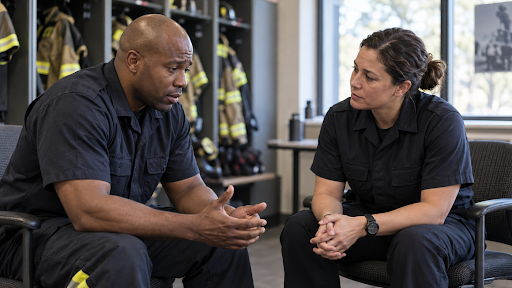
Peer-support programs also require more than selecting well-liked employees. Peer supporters need structured training, defined responsibilities, clinical consultation, referral protocols, supervision, and protection against becoming overwhelmed themselves. They should know when to listen, when to refer, and when an immediate safety response is necessary.
Research examining first responder mental health programs has identified confidentiality protections, access to culturally competent clinicians, internal champions, and collaboration across departments as important areas for improvement (Fisher & Lavender, 2023).
Leadership behaviour remains equally important. Personnel notice whether supervisors speak respectfully about mental health, follow up after difficult events, protect privacy, and allow time to attend appointments. A supportive policy can quickly lose credibility when everyday leadership communicates a different message.
Include Families Without Compromising Privacy
Occupational stress rarely remains at work. Families may notice disrupted sleep, irritability, withdrawal, emotional numbness, increased alcohol use, or a responder’s difficulty adjusting after a challenging assignment.
Family education can help loved ones recognize common stress responses, communicate more effectively, and understand when professional support may be appropriate. It can also explain available resources and crisis procedures.
However, involving families should not mean disclosing a responder’s private information. The goal is to give families general knowledge and clear pathways to assistance while preserving appropriate confidentiality.
Measure More Than Participation
A crowded training room does not prove that a wellness strategy is working.
Agencies should evaluate whether personnel know where to seek help, trust available resources, experience reasonable wait times, and believe they can access support without unfair professional consequences. Anonymous surveys, resource-utilization trends, referral completion, program feedback, sick leave patterns, turnover, and repeated concerns about workload or leadership may all provide useful information.
Evaluation should also protect privacy by applying minimum group-size thresholds to reports, helping prevent individuals in small teams or units from being indirectly identified through aggregated data. Agencies generally need patterns that inform policy not identifiable details about who sought counselling or why.
NIOSH notes that relatively few controlled studies have evaluated mental health programs for public-safety workers. Agencies should therefore be careful about promising that any single program will prevent PTSD, suicide, burnout, or other outcomes (Kiederer et al., 2024). Programs should be reviewed regularly and improved using workforce feedback and the best available evidence.
Prevention Is a Leadership Responsibility
A proactive wellness strategy does not remove the personal responsibility to seek help, use healthy coping skills, or support colleagues. It ensures that responders are not expected to carry the full burden alone.
The clearest sign of a mature wellness culture is not the absence of distress. First responder work will always involve difficult experiences. The sign is whether personnel can recognize strain, access credible support early, and recover without being shamed for responding like human beings to demanding work.
References
Di Nota, P. M., Bahji, A., Groll, D., Carleton, R. N., & Anderson, G. S. (2021). Proactive psychological programs designed to mitigate posttraumatic stress injuries among at-risk workers: A systematic review and meta-analysis. Systematic Reviews, 10, Article 126. https://doi.org/10.1186/s13643-021-01677-7
Fisher, M. P., & Lavender, C. D. (2023). Ensuring optimal mental health programs and policies for first responders: Opportunities and challenges in one U.S. state. Community Mental Health Journal, 59(7), 1341–1351. https://doi.org/10.1007/s10597-023-01121-1
Kiederer, M., Tiesman, H., Gerard, D., Hofer, M., Wheldon, K., Neitlich, D., Shapiro, D., Attwood, W. R., D’Alessandro, M., & Marsh, S. (2024, May 9). Tackling mental health challenges in the public safety sector: Implementing and evaluating mental health programs. National Institute for Occupational Safety and Health. https://www.cdc.gov/niosh/bulletin/2024/mental-health-public-safety.html

.png)





.png)