
.png)


As an HR leader, first responder coordinator, or healthcare policymaker, you've probably been around to see the aftermath of when silence ends and your team goes through a mental health crisis by experiencing severe burnout, a firefighter having a panic breakdown after two back-to-back calls, or someone telling you after you check in with them that they have suicidal thoughts.
These events show us the harsh reality that our mental health system works in a reactive way, responding to the problems once they've occurred instead of preventing them from occurring.
Data shows nearly one in ten U.S. adults experienced a mental health crisis in the past year, with rates climbing to 15 percent among young adults. The gap between crisis counseling and early detection is a costly, preventable failure that affects productivity, retention, and lives.

What Is a Mental Health Crisis?
A mental health crisis occurs when a person's thoughts, feelings, or behaviors become overwhelming to the point that they cannot function in daily life, care for themselves, or may be at risk of harming themselves or others. Clinically, it is any acute situation involving imminent danger or a complete breakdown in coping skills.
In practical terms, this might look like:
- Suicidal ideation with a plan and intent
- A sudden panic breakdown that leaves someone unable to leave their home
- Severe burnout that results in complete withdrawal from work, family, or self-care
These episodes do not appear out of nowhere. They are the result of accumulating mental health warning signs that were either unnoticed or unaddressed.
How Crisis Counseling Works Today
Crisis counseling helps people manage severe psychological stress in short-term situations to meet the immediate need for stabilizing someone experiencing acute mental distress to allow them to resume their normal functioning.
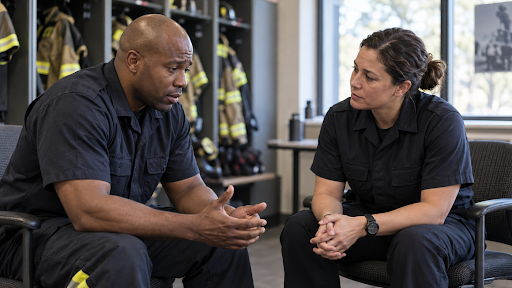
Crisis intervention begins when an individual reaches their “breaking point.” At this point, a crisis intervention team can evaluate risk. Crisis intervention teams are consortiums of law enforcement, mental health professionals, and first responders who respond to calls of individuals experiencing a mental health crisis or behavioral emergency. Trained responders use de-escalation techniques and risk assessment and are trained to help when people are in severe psychiatric crisis without defaulting to arrest or hospitalization.
While the crisis intervention system is effective in the short-term for which it was created, its deficiencies are easily evident. By then, the individual had already suffered significant stress, and their workplace had lost productivity, and their family had suffered a traumatic experience.
The Role of Frontline Crisis Response
First responders and frontline teams operate at the sharp end of this reactive model. Their frontline global crisis response expertise equips them to handle high-pressure decisions under extreme conditions. Trained responders provide short-term stabilization, often in chaotic environments where split-second choices determine outcomes.
This approach saves lives in the moment but leaves deeper patterns of distress unaddressed, contributing to higher rates of PTSD, burnout, and turnover among the very people society relies on most. Globally, one in five people living through emergencies experience a mental health condition about twice the global average.
The Missing Link: Early Detection
By recognizing behavioral changes before they reach the point of crisis, early identification changes the entire "framework." When you begin to notice subtle changes, such as more irritation, pulling away from coworkers, inconsistent sleep patterns, or lower levels of performance, those can be actionable warnings instead of just noise in the background.
Most of the systems have failed because they do not provide ongoing insights into behaviors. People tend to hide their struggles due to the stigma surrounding mental health issues, therefore, managers do not see or acknowledge warning signs. Without a regular check-in, like through regular monitoring, the warning signs will not appear or will be too insignificant to discover until they can no longer be ignored.
Therefore, it is very important to understand the difference between crisis vs prevention mental health. One focuses on responding to outcomes, while the other focuses on identifying patterns before they escalate.

Why Early Signals Are Ignored
Early warning signs are not absent. They are overlooked.
Several factors contribute to this:
- Stigma continues to discourage open conversations
- Many organizations lack tools for behavioral health monitoring
- Mental health is treated as a one-time issue instead of an ongoing process
- Workplace environments often fail to recognize subtle behavioral changes
Without structured systems, these signals remain invisible until they demand urgent attention.
Crisis Counseling vs Early Detection
The difference between these two approaches is not just conceptual. It directly affects outcomes.
The Rise of Proactive Mental Health Solutions
There is a growing shift toward proactive mental health care, particularly in organizational settings. This shift is being driven by both necessity and innovation.
An online mental health counseling program is one of the most practical examples of this transition. Unlike traditional systems, it is not limited to moments of crisis. It supports continuous engagement, allowing individuals to access care before issues escalate.
These programs are designed to integrate into broader workplace mental health support systems, making mental health care more accessible and consistent.
How Technology Bridges the Gap
Technology is playing a defining role in closing the gap between crisis and prevention.
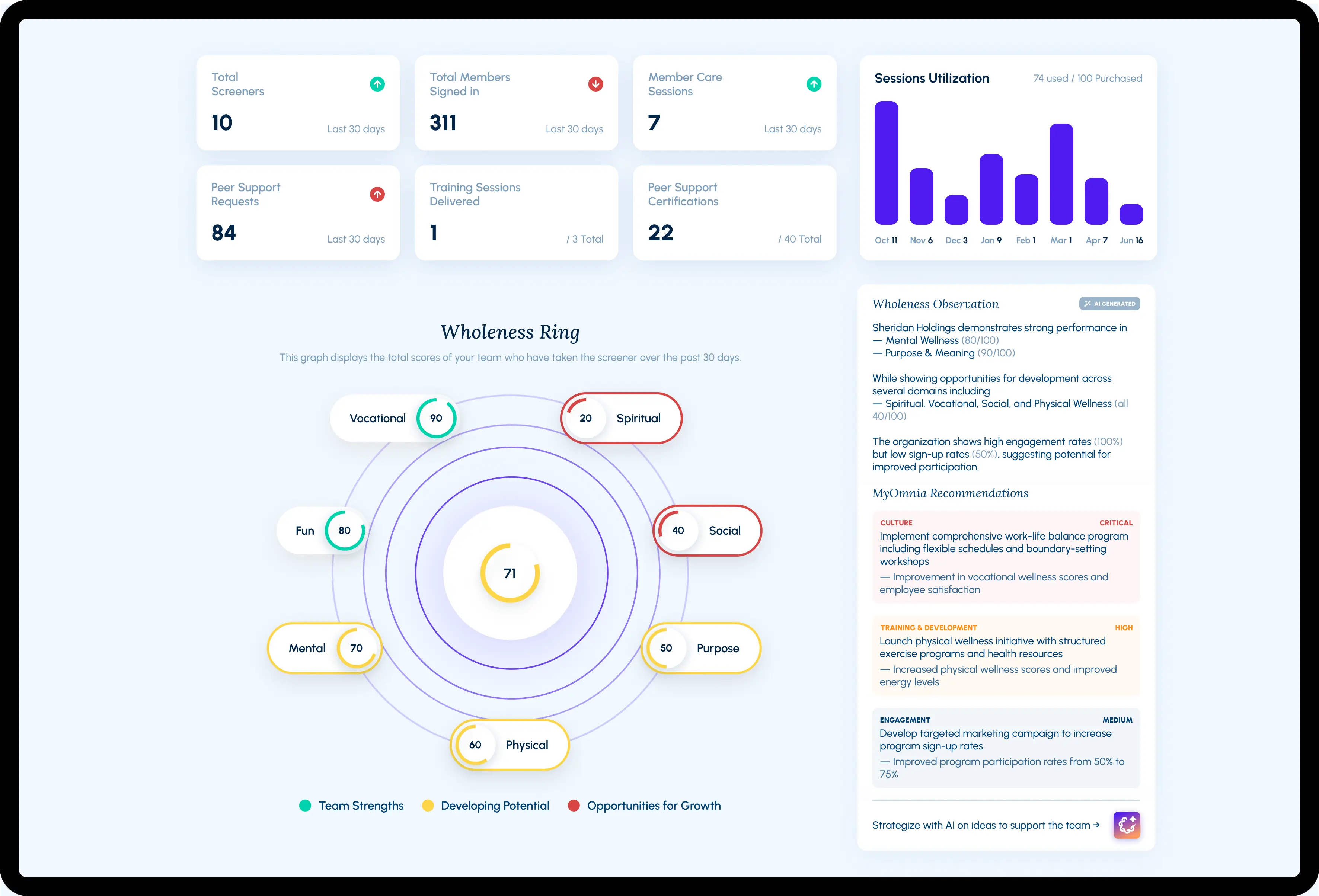
Digital platforms now enable continuous interaction, making it easier to track emotional and behavioral trends over time. This allows for early identification of risk factors that would otherwise go unnoticed.
With the help of predictive insights and real-time monitoring, organizations can move from reactive responses to informed, proactive decisions. Instead of relying solely on individuals to seek help, systems can now identify when support may be needed.
Why Organizations Must Shift Now
There are significant repercussions for delaying the intervention, particularly in high-stress job roles for organizations.
The effect of not identifying mental health issues goes further because absenteeism increases and productivity decreases with an increase in turnover. When it comes to operational safety, these consequences can also affect high-risk jobs like first responders.
Workplace mental health support systems have traditionally been viewed as a way to support your workforce and viewed through the lens of risk management and long-term viability for your organization. Organizations that choose not to implement a proactive model will continue to suffer financially from delayed intervention.
Conclusion: Moving From Reaction to Prevention
The gap between crisis counseling and early detection reflects a deeper issue in how mental health care is structured.
Crisis counseling, supported by a crisis intervention team, will always remain essential. It provides critical support when situations escalate. But it cannot be the only approach.
The future lies in systems that prioritize early identification, continuous engagement, and scalable solutions like an online mental health counseling program. Moving from reaction to prevention is not simply an improvement. It is a necessary shift.
Because the most effective mental health strategy is not the one that responds to crises. It is the one that ensures fewer people reach that point in the first place.

.png)






.png)