
.png)


Too many organizations wait until there is an explosion caused by burnout or turnover before addressing this situation. We should change our way of thinking about how operational stress is managed and place operational stress as a key strategic priority for the company and our teams.
Organizations have made large investments in financial audits, safety protocols, and resilient supply chains. However, regarding people, the response has not been as timely or supportive.
Workplace operational stress is not a random occurrence; rather, it is a systemic challenge inherent in roles that have fluctuating demands, require a high level of emotional interaction, and demand completion on rigid schedules. Leaders can proactively address operational stress and protect both the organization and the people who work in it.

What Is Operational Stress Injury (OSI)?
Operational Stress Injury (OSI) refers to the cumulative psychological and emotional strain that develops from prolonged exposure to high-pressure operational environments.
From a business standpoint, operational stress injury:
- Builds progressively over time
- Impair cognitive performance and decision-making
- Reduces focus and efficiency
- Affects retention and service quality
- Preventable and manageable with structured oversight
The World Health Organization classifies burnout as an occupational phenomenon resulting from chronic workplace stress that has not been successfully managed. This reinforces a key point that unmanaged stress is not random. It reflects a gap in systems.
OSI should be interpreted as an operational signal that workload and recovery are misaligned.
Why Operational Stress Is Predictable
In operations management, predictability comes from understanding patterns. Workplace operational stress follows suit, accumulating due to structural factors in high-demand roles.
Common structural drivers include:
- High workload variability
- Shift work and fatigue cycles
- Emotional labor in client-facing roles
- Decision fatigue
- Exposure to crisis or conflict
- Limited structured recovery
They are downstream indicators of sustained strain. When exposure is continuous and monitoring is absent, measurable performance decline follows increased error rates, slower decision-making, reduced engagement, and higher turnover intent. This is where structured operational stress management becomes essential.
Business Impact of Unmanaged Operational Stress
Unmanaged workplace operational stress affects core business metrics.
Increased absenteeism
Higher turnover and recruitment costs
Replacing experienced employees requires recruitment, onboarding, and productivity ramp-up investment.
Reduced productivity
Cognitive fatigue diminishes throughput, creativity, and decision accuracy.
Safety and compliance risks
Fatigue and impaired attention increase operational errors, particularly in regulated or high-risk environments.
Lower engagement and morale
Chronic strain reduces discretionary effort and organizational commitment.
A structured burnout prevention strategy directly protects performance continuity. When stress is unmanaged, the cost appears in performance data long before it appears in exit interviews.

Proactive vs Reactive Stress Management
Proactive operational stress management is cost-effective because it intervenes early. Early identification reduces severity, shortens recovery time, and protects productivity.
Digital Monitoring & Early Detection
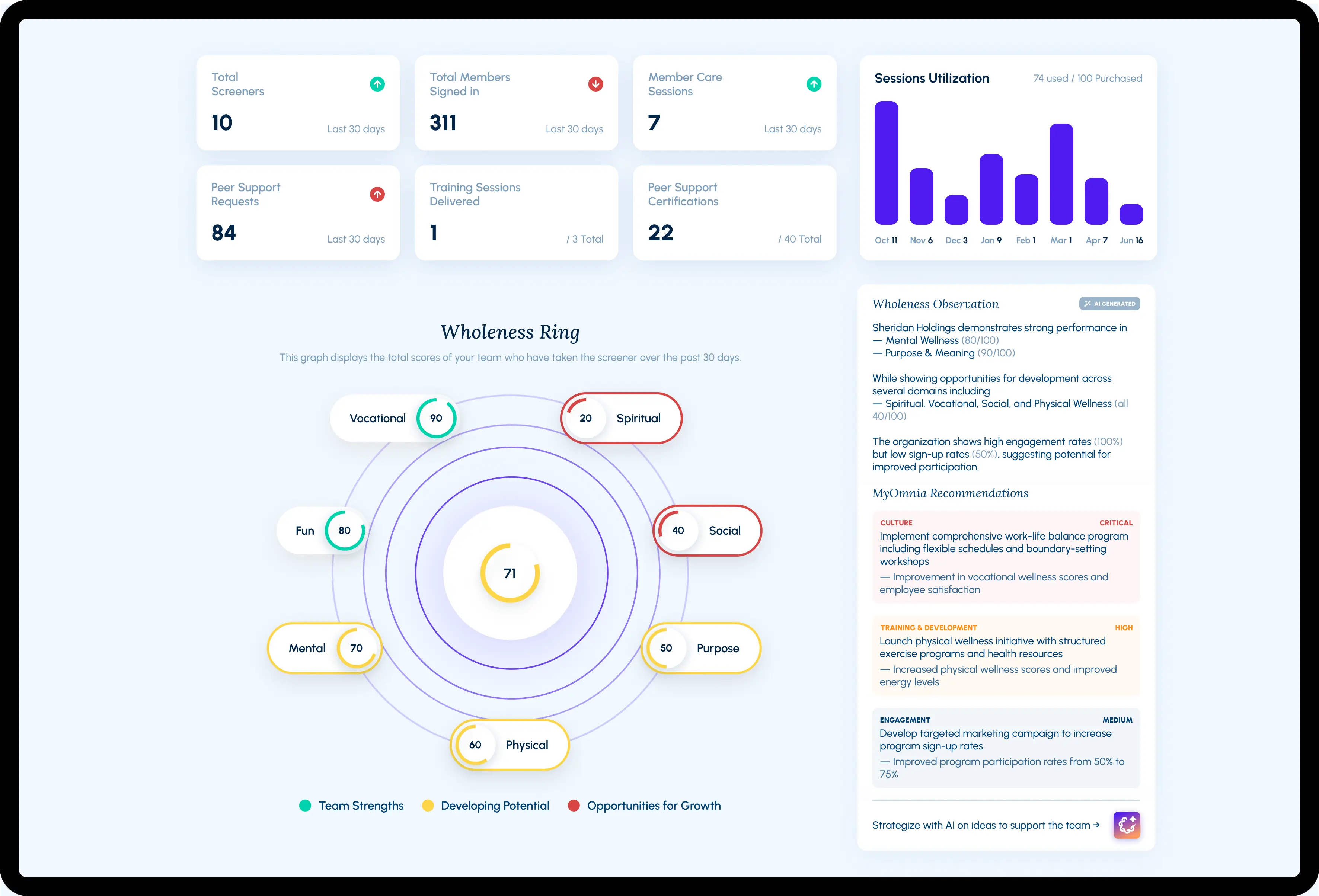
Digital monitoring and early detection tools need to have a scalable model in order for them to be sustainable. Digital mental health monitoring provides a systematic approach to early detection without having an undue administrative burden. For example, the Wholeness Screener offers confidential self-assessment that helps individuals identify early warning signs of operational stress.
Within a broader operational stress management strategy, digital tools can:
- Enable consistent early identification
- Encourage timely self-awareness
- Support data-informed wellbeing planning
- Provide aggregate organizational insight while protecting confidentiality
When monitoring becomes routine, intervention becomes timely. Timely intervention protects performance.
Conclusion
Operational stress is predictable in service-based roles. Ignoring it invites avoidable risks to performance, finances, and reputation.
Predictable risks demand proactive systems. Leaders who prioritize mental health as operational infrastructure foster resilient teams.
Forward-thinking organizations integrate monitoring and recovery into their core strategies. This not only prevents burnout but builds stronger, more adaptive operations.
Step up to proactive leadership. Your teams, and your bottom line, will thank you.

.png)







.png)