
.png)



Most companies would never ignore a broken piece of equipment. They schedule maintenance, run diagnostics, and fix problems before they become costly shutdowns. But the principle is similar: waiting until something breaks is always more costly than noticing strain early. Yet every single day, millions of employees show up to work running on empty, and most employers do not even notice until the damage is already done.
The Numbers Employers Can No Longer Ignore
Around 84% of employees faced at least one mental health challenge in the past year, including stress, burnout, or low motivation.
About 69% of employees say their manager has the biggest impact on their mental health, more than salary or company policy. That is not a small detail. That is a leadership responsibility.
Evidence-based mental health programs return approximately $3.70 in net economic benefit for every $1 invested, with the WHO citing a $4 return per $1. The ROI is not just clear. It is compelling.
Why the Old Approach Is Failing
Many organizations still treat employee mental health as a checkbox. An EAP brochure in the break room. A wellness app nobody uses. A one-time mental health awareness email in May.
Here is the problem: Only about half, 54%, of employees believe their company makes their mental health a priority. You can invest in benefits all day long, but if employees do not know they exist or feel too afraid to use them, the investment goes nowhere.
Fear is a real barrier. 46% of employees worry about losing their jobs if they disclose a mental health concern at work, and 80% of employees with mental health conditions do not seek help at work, with shame and fear of professional consequences cited as the biggest barriers.
What Employees Actually Need in 2026
The good news is that the solution is not complicated. Employees have made it clear what helps. Here is what the data shows they want most:
- Flexible work arrangements. Workers rated good work-life balance and flexibility as the most helpful support at work, above any specific benefit.
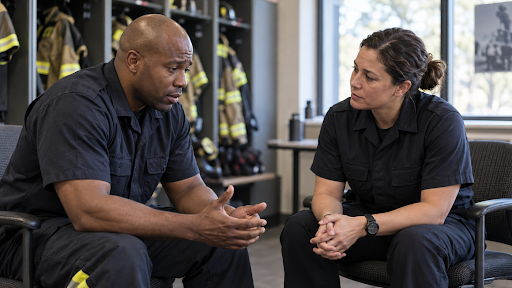
- A manager who checks in. Employees note that their manager checks in regularly about their well-being and feels supported when they face a mental health challenge.
- Mental health training. Employees at companies that offer mental health training are significantly more likely to feel their company prioritizes their mental health (69% vs. 40% at companies without training).
- Psychological safety. Three in four employees say it is appropriate to discuss mental health at work, but fewer than half feel comfortable actually doing it.
- Sustainable workloads. Support only works when the job itself is survivable. Employers need to review staffing, role clarity, workload, and unrealistic response-time expectations.
Are your managers equipped to support mental health at work?
Myomnia trains leadership to hold supportive conversations, reduce stigma, and act on early warning signs before burnout escalates.
Button:
Schedule a call
The Manager Effect: Your Most Underused Resource
If you want to move the needle on workplace mental health, start with your managers. Nearly 70% of employees say their manager affects their mental health as much as their partner, more than their doctor or therapist. Yet fewer than three in ten managers have received any training on how to talk about mental health with their teams.
Employee desire to quit fell from 35% to 18% when managers were trained to hold supportive mental health conversations. That is a retention strategy hiding inside a training program.

A Practical Starting Point for Employers
You do not need to overhaul your entire benefits structure overnight. Start here:
The Bottom Line
Workplaces that support employee mental health see employees who are twice as likely to report no burnout or depression. That is not a feel-good outcome. That is a competitive advantage.
In 2026, mental health is no longer an HR initiative. It is a business strategy. The employers who understand that will build teams that are more resilient, more engaged, and far less expensive to retain.
The ones who do not will keep wondering why their best people keep leaving.

.png)






.png)