
.png)


Mental health is no longer a quiet concern in the workplace. Organizations are increasingly recognizing that employees do not leave stress, anxiety, or emotional challenges outside the office. These experiences directly influence how people think, collaborate, and perform. As conversations around employee mental health become more open, businesses are beginning to understand that supporting well-being is essential, not optional.
This growing awareness has placed workplace wellness programs at the center of modern organizational strategy. These programs are no longer optional perks. They are essential systems of care that support employees as whole human beings.
At the heart of this movement is MyOmnia Health, a well-being partner committed to wholeness, care, and sustainable workplace health. Through integrated wellness services, consulting, and Employee Assistance Program solutions, MyOmnia helps organizations build resilient teams prepared for today’s challenges and tomorrow’s demands.

Understanding Employee Mental Health
Employee mental health refers to the emotional, psychological, and social wellbeing of individuals in their work environment. It shapes how employees think, feel, interact, handle stress, and make decisions throughout their day.
When mental health is supported, employees are more engaged, creative, and resilient. When it is neglected, the impact is often visible in subtle but serious ways, including declining productivity, absenteeism, increased turnover, and strained workplace relationships.
Common signs employees may be struggling include:
- Persistent fatigue or emotional exhaustion
- Difficulty concentrating or making decisions
- Withdrawal from colleagues or teamwork
- Increased irritability or stress reactions
- Decreased motivation and engagement
According to the World Health Organization, depression and anxiety cost the global economy an estimated $1 trillion each year in lost productivity, underscoring the business impact of unmet mental health needs (WHO, 2024).
Common Wellness Challenges for Employees
Modern workplaces present a variety of wellness challenges for employees, impacting their mental, emotional, and social well-being. Understanding these challenges is the first step toward creating effective support systems.
- Workload Pressure and Stress
Tight deadlines, performance metrics, and constant connectivity can lead to chronic stress. Over time, unmanaged stress becomes a major contributor to mental health decline, burnout, and reduced cognitive performance.
- Burnout and Emotional Exhaustion
Burnout is no longer limited to high-risk professions. Employees across industries report feeling emotionally drained, disengaged, and unable to recover. The American Psychological Association notes that prolonged burnout affects both mental and physical health (APA, 2023).
- Poor Work-Life Balance
Remote and hybrid models have improved flexibility but also made it harder to disconnect. Many employees struggle to separate work responsibilities from personal time, increasing the risk for chronic stress and exhaustion.
- Lack of Psychological Safety
Employees who do not feel safe expressing concerns or asking for support often internalize stress. This silence increases risk for anxiety, disengagement, and turnover, and may discourage early help-seeking.
- Remote and Hybrid Work Challenges
Isolation, reduced social connection, and communication gaps can intensify feelings of loneliness and disconnection, particularly for remote teams.
What Are Workplace Wellness Programs
Workplace wellness programs are structured initiatives designed to support employee well-being across physical, mental, emotional, and social dimensions. At their core, these programs aim to create environments where employees can perform at their best without sacrificing health.
Effective workplace wellness programs typically include:
- Mental health support and counseling access
- Stress management and resilience training
- Well-being education and resources
- Leadership and manager training
- Employee assistance programs for confidential support
These programs benefit both employees and organizations by reducing healthcare costs, boosting engagement, and enhancing productivity.
Effective workplace wellness programs can also improve cognitive function and creative problem-solving, particularly when implemented consistently and supported by leadership. They shift the focus from reactive fixes to preventive strategies, helping teams build resilience against daily pressures. (HRCI, 2025)

How Workplace Wellness Programs Address Employee Mental Health Challenges
Well-designed workplace wellness programs actively tackle the key mental health and well-being challenges employees face. Here’s how they make a difference:
Preventing Burnout and Reducing Stress
By offering stress management tools, mental health coaching, and recovery-focused strategies, organizations help employees manage pressure more effectively.
Encouraging Open Conversations
Programs normalize discussions around mental health, reduce stigma, and create safe spaces for employees to share concerns. Open communication fosters trust and ensures employees feel heard and supported.
Improving Engagement and Retention
Employees who feel cared for are more loyal and motivated. Gallup reports that well-being-focused organizations experience higher engagement and lower turnover (Gallup).
Supporting Long-Term Organizational Wellbeing
By embedding wellness into company culture, organizations build resilience and adaptability. A long-term focus on employee well-being strengthens the workplace, helping teams thrive even during periods of change or challenge.
Role of EAP and Professional Support
Employee Assistance Programs (EAPs) and professional support services are critical components of effective workplace wellness programs. They provide confidential, expert guidance that helps employees navigate personal and professional challenges without fear of stigma or judgment.
EAP services often include:
- Short-term counseling and therapy
- Mental health assessments and referrals
- Coaching for stress, work-life balance, and performance
- Crisis intervention and emotional support
By integrating EAPs, organizations create a comprehensive system that addresses challenges proactively, enhances employee resilience, and reinforces a culture of care. According to research, EAP services have been shown to improve employee well-being and reduce outcomes like absenteeism and presenteeism. (Morneau Shepell & Employee Assistance Professionals Association, 2020).
How MyOmnia Health Supports Employee Mental Health
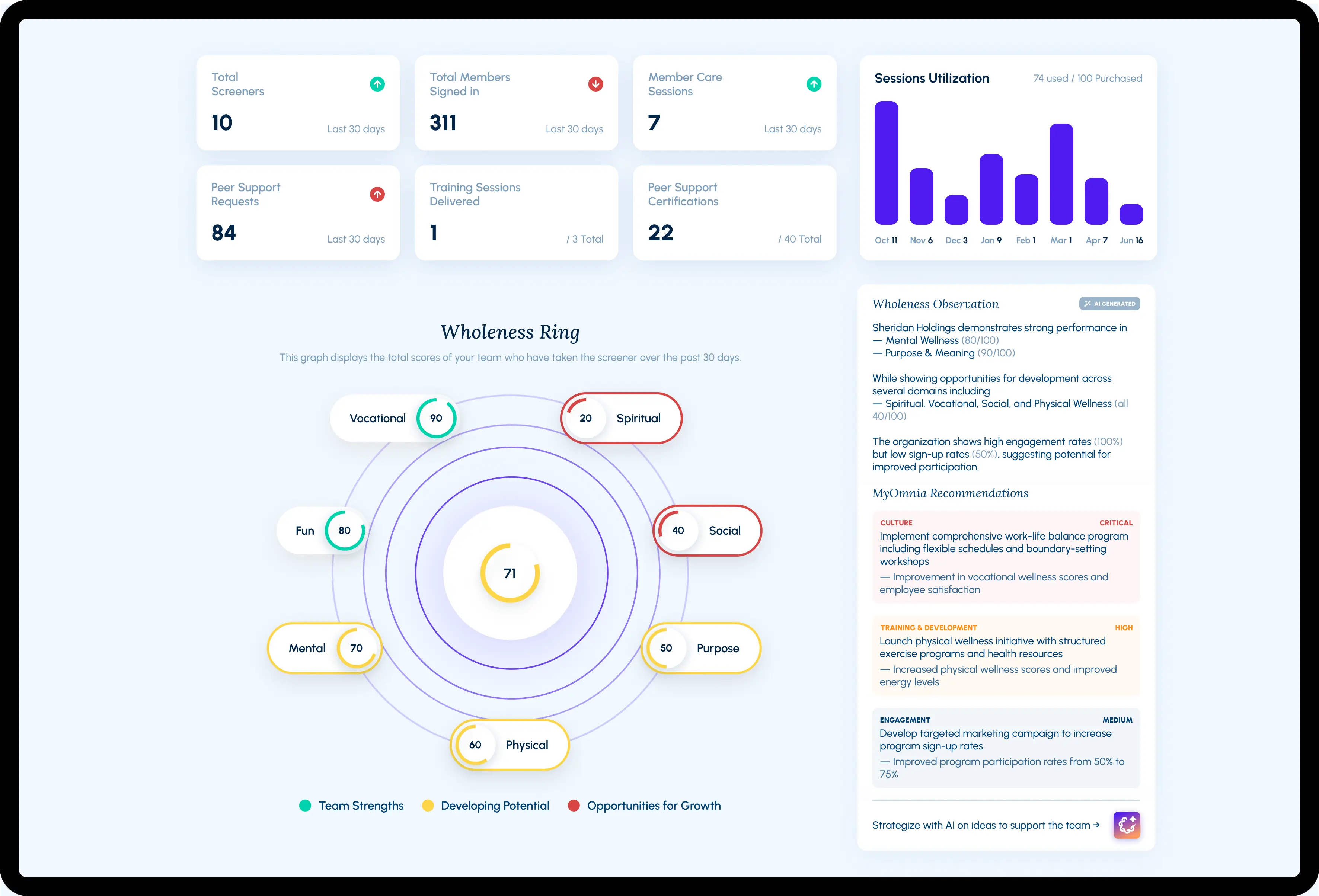
MyOmnia Health approaches workplace well-being through a lens of wholeness. Rather than offering fragmented solutions, MyOmnia delivers integrated support that addresses the full employee experience. MyOmnia Health services include:
- Workplace Wellness Programs: Structured programs focusing on mental health, stress management, and overall employee well-being.
- Well-being and Wholeness Consulting: Aligns organizational culture, leadership, and strategy with employee well-being goals for sustainable impact.
- Mental Health Support and Coaching: Provides coaching and professional support to help employees manage stress, build resilience, and enhance emotional well-being.
- Employee Assistance Program (EAP): Offers confidential counseling, crisis support, and coaching for personal and professional challenges.
- Customized Wellbeing Strategies for Organizations: Tailored strategies to address specific employee challenges, boost engagement, and strengthen long-term organizational health.
This holistic approach helps organizations move beyond surface-level initiatives toward sustainable, people-centered wellbeing systems.
Best Practices for Improving Employee Well-being
Organizations seeking to strengthen employee mental health can take practical, meaningful steps.
- Create a Culture of Psychological Safety: Encourage open communication, trust, and a workplace where employees feel safe to share concerns without fear of judgment.
- Offer Accessible Mental Health Resources: Provide easily reachable tools, counseling, and support services to help employees manage stress and emotional challenges.
- Train Leaders to Support Employee Well-being: Equip managers with skills to recognize signs of stress, offer support, and foster a caring work environment.
- Encourage Balance, Recovery, and Flexibility: Promote work-life balance through flexible schedules, recovery time, and wellness initiatives that prioritize employee health.
- Regularly Evaluate Wellness Initiatives: Continuously assess and adapt programs based on employee feedback and organizational needs to ensure long-term effectiveness.
Conclusion
Prioritizing employee mental health is key to building engaged, productive, and resilient workplaces. Supporting well-being helps prevent burnout, reduces stress, and creates a culture where employees feel valued and motivated.
Partnering with MyOmnia Health gives organizations access to holistic wellness programs, mental health support, and Employee Assistance Programs. These solutions help companies foster healthier, more balanced, and people-centered workplaces, driving both employee satisfaction and long-term organizational success.
Frequently Asked Questions
Q: What is employee mental health in the workplace?
Employee mental health refers to emotional, psychological, and social well-being as it relates to work demands, relationships, and environment.
Q: Why are workplace wellness programs important?
They provide structured support that helps prevent burnout, reduce stress, improve engagement, and enhance overall organizational well-being.
Q: What wellness challenges for employees are most common today?
Stress, burnout, poor work-life balance, lack of support, and challenges related to remote or hybrid work are among the most common.
Q: How does an Employee Assistance Program help employees?
EAPs offer confidential counseling, coaching, and crisis support to help employees navigate personal and professional challenges.
Q: How can MyOmnia Health support my organization?
MyOmnia Health delivers holistic wellness programs, consulting, mental health support, and EAP solutions tailored to organizational needs.
References
- World Health Organization. (2024, September 2). Mental health at work. https://www.who.int/news-room/fact-sheets/detail/mental-health-at-work World Health Organization
- American Psychological Association. (n.d.). Workplace burnout. https://www.apa.org/topics/healthy-workplaces/workplace-burnout APA
- HR Certification Institute. (2025, June 17). Surprising benefits of workplace wellness programs. https://www.hrci.org/community/blogs-and-announcements/hr-leads-business-blog/hr-leads-business/2025/06/17/surprising-workplace-wellness-benefits Hrci Marketing
- Gallup. (n.d.). Employee engagement vs. employee satisfaction and organizational culture. https://www.gallup.com/workplace/236366/right-culture-not-employee-happiness.aspx Gallup.com
- Morneau Shepell & Employee Assistance Professionals Association. (2020, September 17). EAP counseling significantly improves employee wellbeing, ability to concentrate and productivity [Press release]. PR Newswire. https://www.prnewswire.com/news-releases/eap-counseling-significantly-improves-employee-wellbeing-ability-to-concentrate-and-productivity-301132345.html

.png)





.png)