
.png)


The most effective and human-centered strategy for workplace mental health is peer support. Organizations are curious for solutions that truly resonate with employees as stress, burnout, and disengagement are increasing, and they are addressing their unique psychological and emotional needs rather than just appearing beneficial.
Peer-led mental wellness programs foster secure environments where employees can talk openly, normalize challenges, and feel less isolated. These programs perform best when they are backed by real data. Measuring engagement, trust, and psychological safety is important for long-term success.
MyOmnia Health helps organizations understand their mental wellness, engagement, and cultural health using evidence-based employee surveys and insights so peer support isn’t just well-meaning but actually effective.

Who Is a Peer Worker?
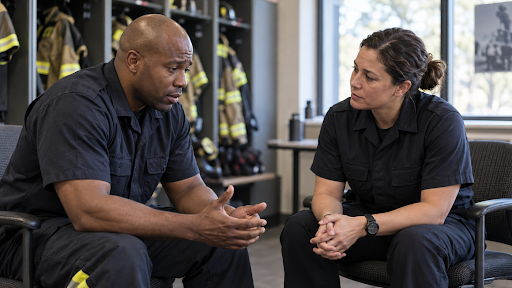
A peer worker provides support to others facing similar situations with their lived experience with mental health challenges. Peer workers are trained to listen, guide, and connect colleagues to appropriate resources without judgment in workplace settings.
Key characteristics of a peer worker
- Lived experience with mental health or life challenges
- Trained in the delicate balance of listening and maintaining healthy boundaries.
- Focus on empathy, trust, and mutual understanding
Peer workers assist in normalizing conversations about stress, anxiety, burnout, and work-life balance in employee mental wellness programs. This direct connection plays a crucial role in strengthening peer mental wellness across teams.
This strategy is supported by research. Studies show that peer support improves hope, engagement, and self-efficacy among participants (Substance Abuse and Mental Health Services Administration, 2023).
Understanding Peer Mental Wellness in the Workplace
Peer mental wellness refers to the practice of employees supporting each other through shared experiences to promote emotional health and resilience at work. It's about creating spaces where colleagues can openly discuss challenges without fear of judgment, which has been shown to reduce feelings of isolation and promote a sense of belonging.
Why peer-to-peer support works
- It minimizes stigma around mental health conversations
- It builds trust faster than top-down initiatives
- It increases early intervention before issues escalate
The benefits for employee engagement and retention are significant. Research shows that peer support programs increase employees' sense of belonging, lower absenteeism risks, and boost overall job satisfaction. (Lakeside Insurance LLC, 2025).
What Is Certified Peer Support?
Certified peer support combines professional standards and structured training with personal experience. Certified peer support specialists complete accredited programs that teach ethics, communication skills, crisis response, and workplace boundaries.
Training for certified peer support typically includes courses on recovery principles, ethics, and communication skills, which frequently leads to state or national certification. This credibility enhances their workplace impact, as organizations can rely on their expertise in facilitating support groups or crisis intervention. (Mental Health America, n.d.)
Organizations that make investments in certified peer support demonstrate a long-term commitment to employee mental wellness.
Certification matters for organizations because it ensures professionalism and consistency, reducing liability while optimizing benefits. Certified peer support specialists bring authenticity that traditional programs lack, leading to better outcomes in employee mental wellness.
Peer Support Specialist News & Industry Trends
Peer support specialist news recently shows rapid growth beyond healthcare and into corporate environments. What was once exclusive to community mental health settings is now being adopted by employers across industries, with a noticeable rise in remote and hybrid work situations where peer support reduces feelings of loneliness.
Organizations are investing in peer support specialists to fight isolation in remote setups, with initiatives like virtual social events and AI-integrated tools. Mental health platforms are shifting toward on-demand support, integrating peer elements for proactive care.
According to Deloitte, organizations that prioritize peer-based well-being programs report greater engagement scores and stronger trust (Deloitte Insights, 2024). This trend signals that peer support is becoming a core component of workplace culture.
Measuring Peer Support Impact with Employee Surveys

Measurement is essential to ensure peer support programs deliver real results. Without data, even the best initiatives risk losing support over time. Utilizing data to assess employee perceptions of trust and support helps organizations fine-tune their peer programs. This is where employee survey vendors play a critical role.
Modern employee engagement survey providers help organizations connect peer support initiatives with real employee feedback. Surveys can assess:
- Psychological safety
- Trust in peer resources
- Willingness to seek support
- Perceived cultural change
Questions on inclusion and peer interactions can highlight strengths and gaps. This data-driven approach ties peer mental wellness to tangible outcomes like reduced burnout.
By working with experienced employee survey vendors, HR teams can move beyond anecdotal success stories and make data-informed decisions.
How MyOmnia Health Supports Peer-Driven Wellness
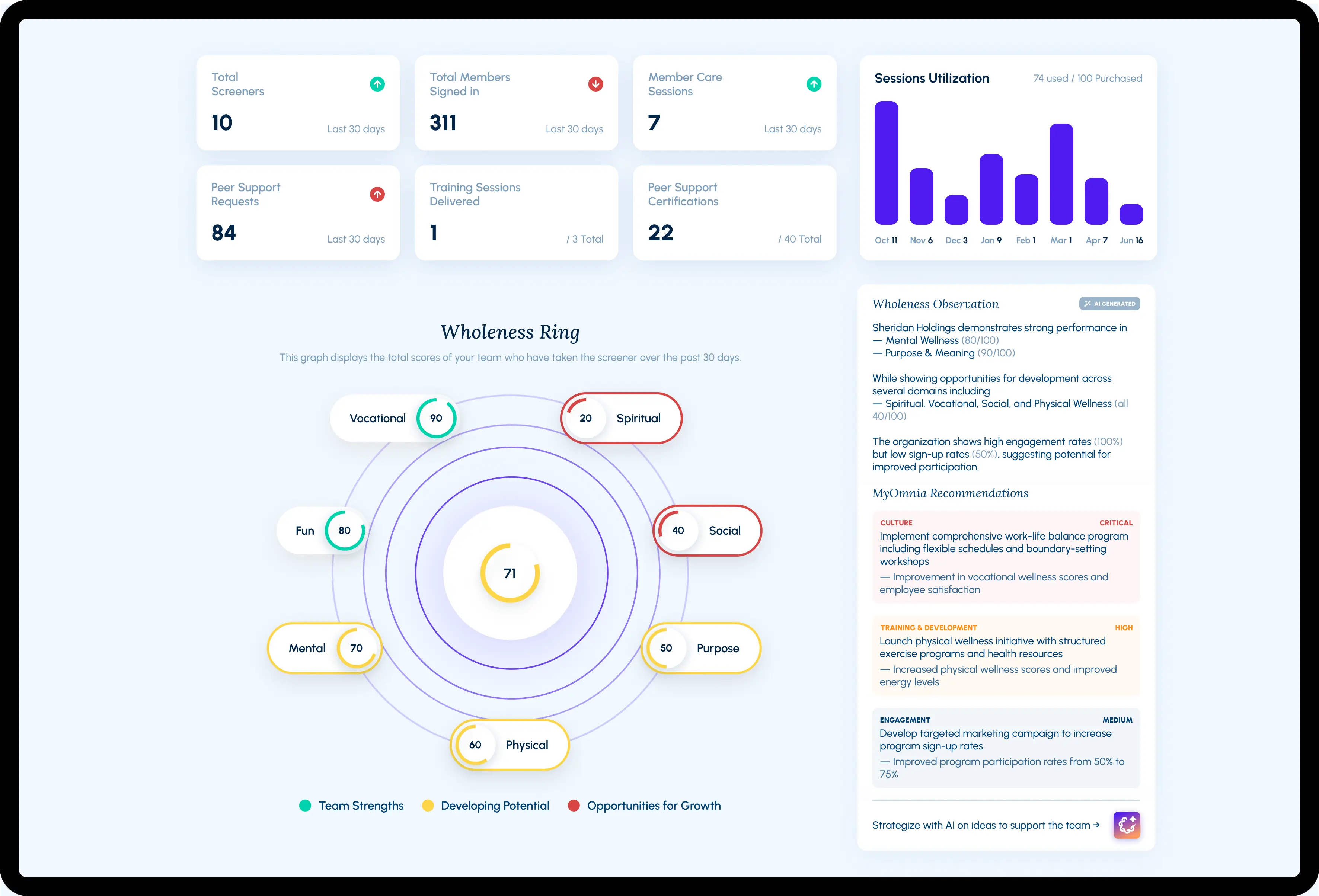
MyOmnia Health provides comprehensive services designed to enhance peer mental wellness through innovative tools. Their employee survey vendors include the MyOmnia Wholeness Screener, which assesses seven domains to pinpoint mental health needs and strengths.
Engagement tools feature AI-driven resilience pathways that support peer activities with progress tracking and customize plans based on real-time data. This makes it easier for HR leaders to integrate certified peer support into more comprehensive wellness plans.
Data-driven insights from MyOmnia Health improve peer mental wellness programs by providing evidence-based interventions, like Accelerated Resolution Therapy for trauma. These solutions foster a supportive culture, reducing burnout and enhancing retention for high-performing teams.
Conclusion
Peer support, through peer workers and certified peer support specialists, adds immense value by reducing stigma, boosting engagement, and promoting recovery. Combining these with survey-based insights guarantees they are data-driven, clinically sound, and flexible enough to meet the changing demands of employees.
Organizations that integrate peer mental wellness with insights from employee survey vendors are better equipped to build cultures where employees feel supported, engaged, and valued.
To explore how data-driven tools can strengthen your peer wellness strategy, visit MyOmnia Health and discover solutions designed for today’s workforce.
FAQs
Q: What is the difference between a peer worker and a manager-led wellness initiative?
A peer worker provides support through lived experience and shared understanding, while managers usually operate from a leadership or performance perspective.
Q: Does the workplace require qualified peer support?
Certified peer support guarantees consistency, ethical boundaries, and credibility, making programs safer and more effective for organizations.
Q: How do employee surveys support peer mental wellness programs?
They provide the anonymous, honest feedback that you can’t get in meetings. They tell you if trust is actually building, if the program is engaging, and exactly where to focus improvements.
Q: Can peer support work in remote or hybrid teams?
Yes. Many peer support specialist news updates highlight successful virtual peer programs supported by digital tools and surveys.
Q: How does MyOmnia Health fit into peer support strategies?
MyOmnia Health provides the measurement and insight layer. It helps organizations assess the baseline, track the impact of peer interventions, and generate insights that make these human-led programs smarter and more sustainable.

.png)





.png)