
.png)


Health care systems depend on people who show up every day to care for others, often at the expense of their own well-being. From emergency rooms to long-term care facilities, the mental and emotional toll on clinicians, nurses, technicians, and support staff is real, measurable, and growing across multiple health care settings and roles.
In health care workers mental health, a growing crisis is highlighted by the fact that nearly half of health workers (46%) reported feeling burned out very often. This has implications for patient care quality, workforce retention, and individual well-being. (CDC, 2023)
Organizations are starting to realize that the front line workers mental health is a leadership responsibility, a workforce sustainability issue, and a patient safety issue as awareness grows. For organizations, investing in counseling for health care workers is a strategic priority that protects both people and performance.

Understanding Health Care Workers Mental Health Challenges
Burnout affects about 50% of health care workers mental health globally, with nurses and physicians experiencing rates as high as 66%. It's characterized by emotional exhaustion, depersonalization, and a diminished sense of accomplishment. (Engen, 2023)
Long hours, such as 12-hour shifts or more, made it worse, leaving little room for recovery. Healthcare professionals also feel overburdened by the suffering they see as a result of emotional demands such as continuously empathizing with patients in pain or crisis.
Counseling for health care workers is a preventative measure because these issues worsen in the absence of organized support networks.
Front Line Workers Mental Health Risks
Additional pressures are faced by those working in emergency departments, trauma units, ICUs, and crisis response settings. Front line workers mental health is uniquely affected by direct exposure to life-threatening events, sudden loss, and high-stakes decision-making.
The psychological strain includes:
Trauma Exposure
Repeated exposure to emergencies eventually leads to secondary traumatic stress or symptoms similar to PTSD.
Emotional Isolation
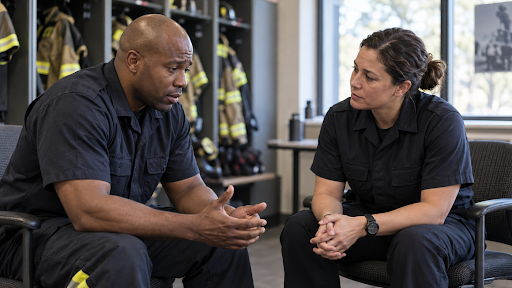
Health professionals frequently believe they must maintain their strength, which can lead to internalized stress and isolation.
Sleep and Cognitive Strain
Rotating shifts and night work disrupt sleep cycles, increasing susceptibility to mood and anxiety disorders.
Proactive support is necessary to prevent long-term harm, because these risks amplify front line workers mental health concerns.

Counseling for Health Care Workers
Counseling for health care workers provides structured, confidential support tailored to the realities of clinical environments. Unlike general wellness resources, professional counselling addresses:
- Work-related trauma and grief
- Burnout and moral distress
- Anxiety, depression, and sleep issues
- Work-life boundary challenges
Counseling for health care workers includes approaches like trauma-focused cognitive behavioral therapy (CBT) or eye movement desensitization and reprocessing (EMDR) to help process traumatic events, reducing symptoms of anxiety and depression.
Early intervention yields big benefits such as psychological support, improved mental health, quality of life, and even productivity among health workers (Dalmasso et al., 2021).
Key advantages include
- Stress Management: Techniques like mindfulness reduce burnout by up to 27% in targeted programs.
- Emotional Resilience: Regular sessions help release guilt and rebuild empathy without fatigue.
- Long-Term Prevention: Counseling lowers turnover rates, keeping experienced staff in the field.
- Confidentiality and accessibility: Services are designed to be private, easy to access around demanding schedules, and practical for the realities of clinical work.
Organizations should integrate these services seamlessly, perhaps through employee assistance programs (EAPs), to make counseling for health care workers accessible and routine.
Reducing Stigma and Encouraging Support
Stigma remains one of the biggest barriers to care. Many professionals hesitate to seek support due to concerns about confidentiality, licensing implications, or workplace perception. Organizations must actively reduce these fears to strengthen health care workers mental health.
Organizations can help by:
- Ensuring confidentiality of counselling services
- Offering anonymous access options
- Clearly separating mental health support from performance evaluation
Treating psychological support in the same manner as physical safety is necessary to normalize discussions about front line workers mental health. Simple actions like regular check-ins or leadership-led discussions can shift the culture of the workplace.
The Organizational Role in Mental Wellnesshealth care workers mental health
Organizations are essential in supporting health care workers mental health. Effective programs often include:
- On-demand counseling for health care workers
- Initiatives for peer support
- Mental health training for managers
- Regular pulse surveys to assess workforce well-being
- Flexible scheduling where possible
Mental health initiatives are most effective when they are evaluated regularly. Organizations can better understand actual needs and modify support by using anonymous surveys, pulse checks, and feedback tools.Take a quick online mental health test to check your stress and well-being.
Conclusion
Health systems cannot function without the dedication of their workforce. Maintaining high levels of patient care, employee retention, and organizational resilience all depend on protecting health care workers mental health.
Organizations foster environments where professionals can flourish by giving counseling for health care workers and addressing front line workers mental health with compassion and structure.
Proactive, accessible, and confidential support ensures that those who care for others receive the care they deserve in return.
FAQs
Q1. Why is counseling for health care workers important?
Ans: Counseling for health care workers helps address stress, burnout, and trauma early, reducing long-term mental health risks and improving job sustainability.
Q2. How can organizations support front line workers mental health?
Ans: By offering confidential counselling, reducing stigma, training leaders, and regularly assessing staff well-being.
Q3. Does early mental health support really make a difference?
Ans: Yes. Research shows early intervention lowers symptom severity and improves recovery outcomes.
Q4. How can leaders encourage employees to seek support?
Ans: Openly discussing mental health, ensuring confidentiality, and modeling help-seeking behavior themselves can encourage employees to seek support.

.png)






.png)