
.png)


According to the American Institute of Stress, 47% of employees say the majority or all of their stress comes from work, yet most of them never say a word about it to their employer. Not because they do not want help. Because they are afraid of what happens if they ask.
That fear has a name: workplace mental health stigma. And until organizations address it directly, even the most well-funded employee wellness program will underperform. Mental health assessment tools, particularly anonymous ones, are changing that equation by making it safe for employees to be honest.

What Is an Employee Wellness Program?
An employee wellness program is a formalized group of strategies aimed at shaping the precise and better health of workers. It benefits the health programs, which usually contain wellness assessments, exercise initiatives, stress reduction tools, nutrition education, and access to counseling or EAPs.
Mental health is now a key focus area with growing recognition of the effects and impact of burnout, anxiety and depression. But still, most programs continue to miss the mark because they are not getting to that underlying barrier: mental health stigma at work.
Employee wellbeing has a direct effect on productivity, turnover, and even healthcare expenses. Poor mental health across the globe costs $1 trillion annually in lost productivity.
What Are Mental Health Stigmas in the Workplace?
Mental health stigma in the workplace refers to the negative beliefs, attitudes, or stereotypes surrounding any type of help you may seek to address mental health problems (psychological issues) as being a sign of weakness.
75% of employees have experienced some level of mental health issue and that 4 out of 5 employees did not seek help because of shame associated with the stigma of mental illness. Mental Health Issues such as anxiety disorder, burnout, or depression are often something employees will remain quiet about for fear of:
- Being perceived as weak or unreliable;
- Facing career consequences
- Being perceived as untrustworthy and losing credibility
- Potential Breaches of Confidentiality in an HR Process or
- Being labeled/stigmatized by your co-workers.
When stigma affects the individual employee, the overall well-being deteriorates and impacts organizational performance.
Why Traditional Wellness Programs Often Struggle
Wellness programs have been introduced by organizations to help their employees, and yet there is still a very low participation rate. Average participation rates stay around 20-30%, with many EAPs expected to see less than 7-10% utilization.
Most traditional programs tend to be reactive in nature, relying on employees to voluntarily share their personal struggles. Employees fear professional repercussions or simply do not trust that their information is kept private.
Even generous benefits do not get used in an atmosphere absent of psychological safety. When programs are developed purely for the sake of it, workplace mental health solutions becomes a mere symbolic checkbox.
Low engagement leads to burnout that goes unnoticed, which drives up costs and reduces morale. That, in turn, leads leaders to ask whether the ROI on investments in wellness is worth it.

How Mental Health Assessment Tools Reduce Workplace Stigma
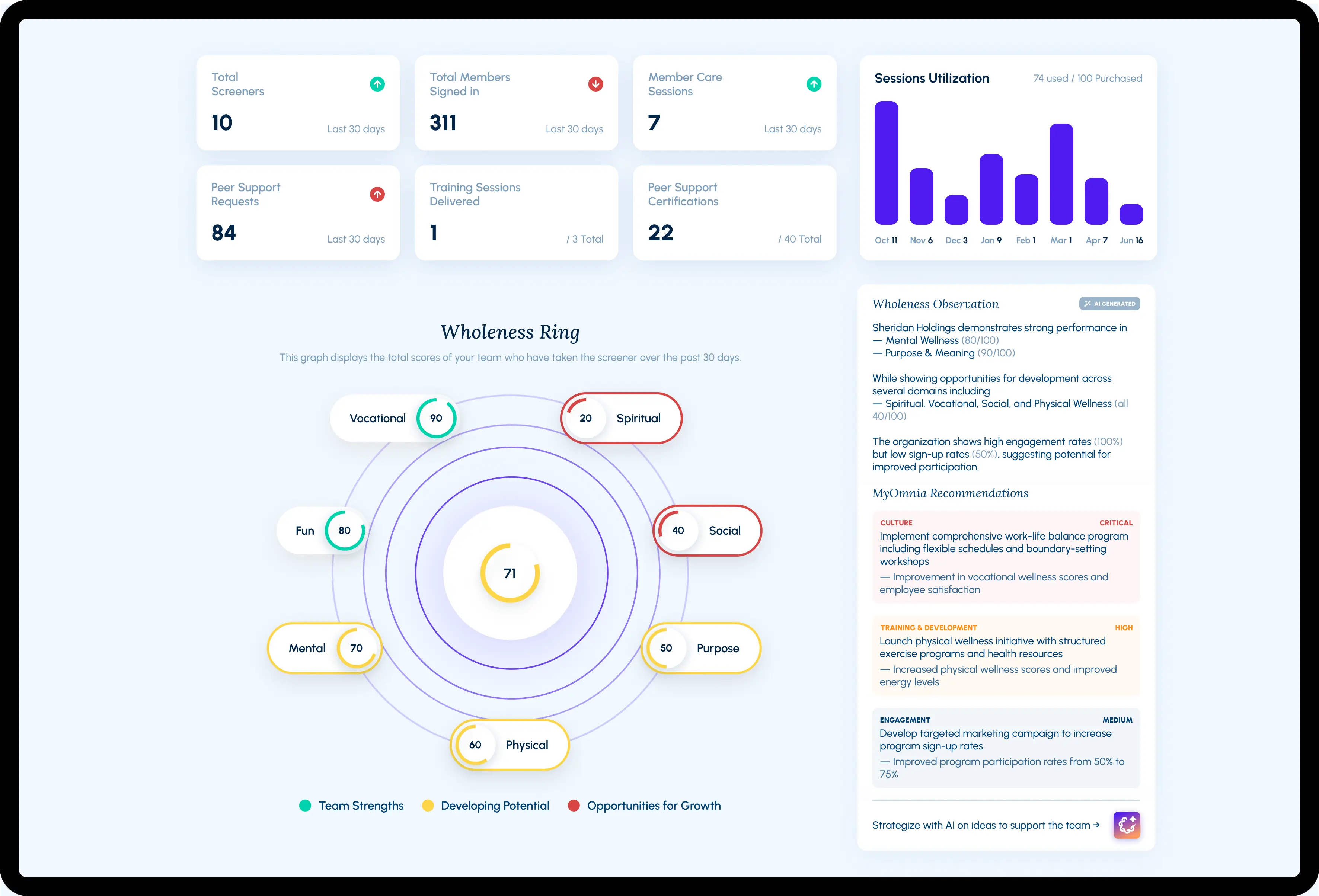
With anonymous mental health assessments, employees can be honest about their feelings without having to reveal their identity. When there is no consequence to providing truthful answers, there is no reason for an employee to hold back.
Anonymous and confidential assessments create psychological safety in the workplace by:
- Immediate feedback with privacy and anonymity through anonymous and secure assessments
- A safe workplace promotes open communication without having to disclose your identity to anyone.
- Early detection of issues such as stress and burnout before they can get worse.
- Increased honesty of responses will provide Human Resource professionals with better quality information to help identify system-wide problems.
When employees have to answer an anonymous assessment, their tendency to respond to the assessment is increased, thus improving both the mental health assessment results and the likelihood that they will be willing to reach out for help.
Types of Mental Health Assessment Tools Used in Employee Wellness Programs
Organizations deploy various employee wellness assessment tools and mental health screening tools tailored to workplace needs
These tools integrate well with existing employee wellness programs, providing actionable insights without compromising privacy.
Benefits for Employers and HR Teams
If introduced carefully, anonymous mental health assessment tools can provide an organization with many advantages. HR professionals and wellness leaders can look forward to the following:
- Higher participation rates across an organization, including hard-to-reach leadership teams.
- Earlier identification of burnout before absenteeism or resignations occur.
- Reduced healthcare costs associated with untreated mental health disorders.
- Improved retention rates because employees feel that their employer takes an interest in them.
- Use of employee data to adjust wellness programs at the organizational level to make evidence-based decisions on how best to support the mental health of employees.
- A culture that fosters a safe space for all employees to communicate with each other.
Best Practices for Implementation
When an organization implements an employee mental health assessment tool to assess its employees, it is important to have an effective implementation strategy in place
- Have a transparent policy on confidentiality: Employees need to know who will see the data about them, and how the data will be used.
- Voluntary participation: Instead of mandatory or compulsory assessments, make them voluntary or optional.
- Provide leadership support: Employees will be more likely to accept the assessment tool if senior leaders publicly support it and participate in the program themselves.
- Follow-up: Assessments need to link to real resources, such as an EAP, therapy referrals, or changes in workload.
- Use aggregate-level data: Group-based insights as a means of informing policy
- Run assessments consistently: One-time surveys do not capture change over time. Build regular check-ins into the annual calendar.
Conclusion
Workplace mental health stigma is not going away on its own. As long as employees believe that admitting struggle comes with professional consequences, they will keep that struggle hidden and suffer in silence. Traditional wellness programs, however well-intentioned, cannot close that gap without first addressing the trust deficit at its root.
Mental health assessment tools, particularly anonymous mental health assessments, give organizations a practical and compassionate way forward. They protect employees while generating the data employers need to build genuinely supportive workplaces. When trust is built into the structure of the system itself, participation rises, stigma loses its grip, and early intervention becomes the norm rather than the exception.
The future of employee well-being is not louder wellness campaigns. It is smarter, safer systems that meet employees where they actually are.

.png)







.png)