
.png)



Understanding Resilience and Mental Wellbeing
Resilience in a workplace is the capacity to adapt, recover, and even grow stronger when challenges arise, such as tight deadlines, team conflict, or the emotional weight of high-stakes decisions. It might include emotional balance, psychological flexibility, and strong social connections at work.
In organizational settings, this translates to:
- Emotional regulation under pressure
- Healthy work relationships
- A sense of purpose and meaning
- Access to psychological safety
Mental Health in the Workplace Today
The last ten years have seen a significant increase in the discussion of mental health in the workplace. Existing demands have been exacerbated by remote employment, economic uncertainty, and the rapid digital transition.
For employers, the implications are tangible:
- Increased absenteeism
- Higher healthcare costs
- Reduced engagement
- Lower retention
Common Wellness Challenges for Employees
Modern employees face a complex mix of pressures. Among the most common wellness challenges for employees are:
These wellness challenges for employees are often structural issues requiring organizational solutions.
Recognising the Signs of Anxiety
One of the most common mental health issues in the world is anxiety. Early detection of the signs of anxiety can prevent it from getting worse.
Common signs of anxiety in the workplace include
- Persistent worry or restlessness that makes it difficult to concentrate
- Physical symptoms include racing heart, tension headaches, or trouble sleeping
- Behavioral changes like avoiding meetings, withdrawing from team interactions, or perfectionism that masks fear of failure
- Emotional irritability, tearfulness, or feeling overwhelmed by routine tasks
Managers' responses can shift from disciplinary to supportive when they are trained to recognize the signs of anxiety. Significant impact can be made by simple actions like sending staff members to professional resources, temporarily adjusting workload, or checking in privately.
The Role of Mental Health Charities
Mental health charities are so important for raising awareness, educating, and breaking down stigma. Organizations such as Mental Health America and the National Alliance on Mental Illness offer workplace toolkits, screening tools, and evidence-based resources.
These mental health charities assist and support corporate schemes by:
- Offering instructional resources
- Hosting awareness campaigns
- Providing crisis support resources
- Promoting the reform of policies

How Employee Surveys Support Workplace Mental Health
To gain a comprehensive understanding of employee experiences, many organizations collaborate with employee survey vendors and employee engagement survey providers.
Surveys help organizations:
- Determine new patterns of stress
- Identify the degree of engagement.
- Detect gaps in leadership support
- Assess psychological safety perceptions.
These insights assist leaders in creating strategies that truly work, such as modifying workloads, enhancing manager training, or expanding access to mental health days when used thoughtfully.
How MyOmnia Health Supports Organisations
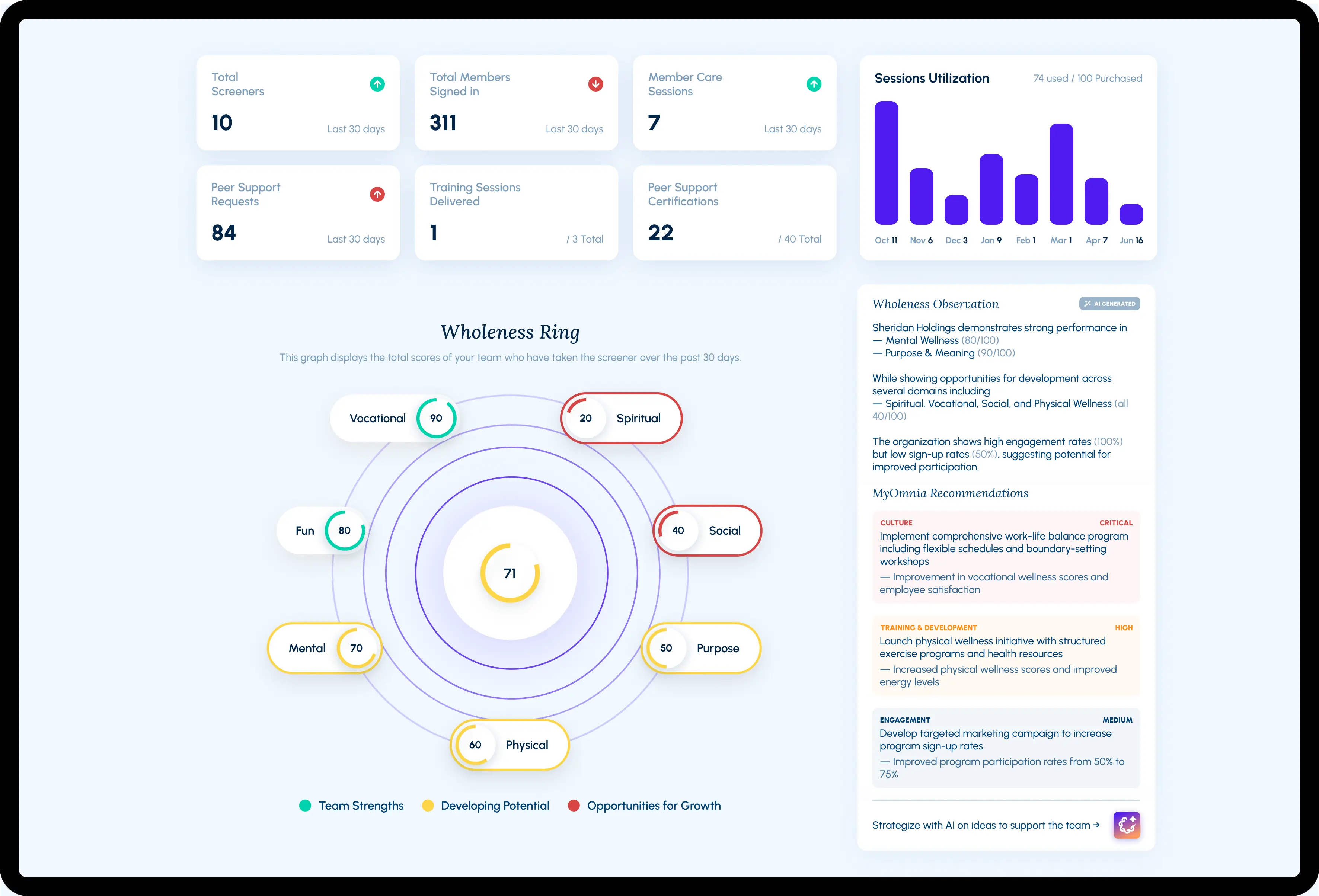
Through MyOmnia Health, we prioritize well-being over all else and work from a foundation of empathy and understanding. MyOmnia supports organizations in performing in-depth surveys and provides analytics for:
- Providing well-being & employee engagement survey's
- Providing in-depth coverage and mental health reporting
- Well-being driven consulting services
- Developing evidence-based intervention to promote resilience and mental well-being
Best Practices to Improve Workplace Mental Well-being
Intention is necessary to develop long-lasting resilience and mental health. Consider these evidence-informed practice:
- Encourage open communication: Normalize conversations about mental health in the workplace.
- Engage through surveys: Partner with expert employee survey providers to obtain actionable feedback.
- Provide accessible resources: Mention EAP programs and connections to mental health charities.
- Leaders trained in empathy: Psychological safety is much more developed by managers than policies on their own.
- Promote balance and recovery: Encourage realistic workloads and genuine time off.
Conclusion
Resilience and mental health are quantifiable positives developed under the right conditions that correlate with performance and retention. Organizations can build cultures that genuinely support their people by recognizing the signs of anxiety, addressing wellness challenges for employees, and leveraging insights from employee engagement survey providers.
MyOmnia Health stands ready to help organizations listen better, respond smarter, and create environments where employees thrive. Explore how we can support your teams. Because when people feel truly supported, everyone wins.
FAQs
Q1. Why are resilience and mental wellbeing crucial in the workplace?
Ans. Resilience and mental wellbeing help employees manage stress, adapt to change, and maintain productivity. Organizations that make investments in these areas frequently see reduced turnover and increased engagement.
Q2. What are some ways that organizations can help promote mental health in the workplace?
Ans. Access to employee assistance programs, leadership development, open lines of communication, and employee surveys identifying worker needs are key to improving mental health in the workplace.
Q3. What are common signs of anxiety in employees?
Ans. Excessive worry, social disengagement, difficulty concentrating, fatigue, and irregular sleep patterns are the common signs of anxiety. Early identification is the cornerstone of effective therapeutic intervention.
Q4. How are well-being in the workplace and employee surveys connected?
Ans. Employee engagement survey providers help measure psychological safety and reveal stress patterns while developing concentrated action plans that improve well-being overall.

.png)






.png)