
.png)


For veteran-serving organizations, nonprofits, VA-affiliated programs, government agencies, and employers hiring veterans, the question is not whether support is needed. Organizations must devise ways to deliver structured, scalable, and measurable veteran mental health services that will be able to respond to rapid changes.
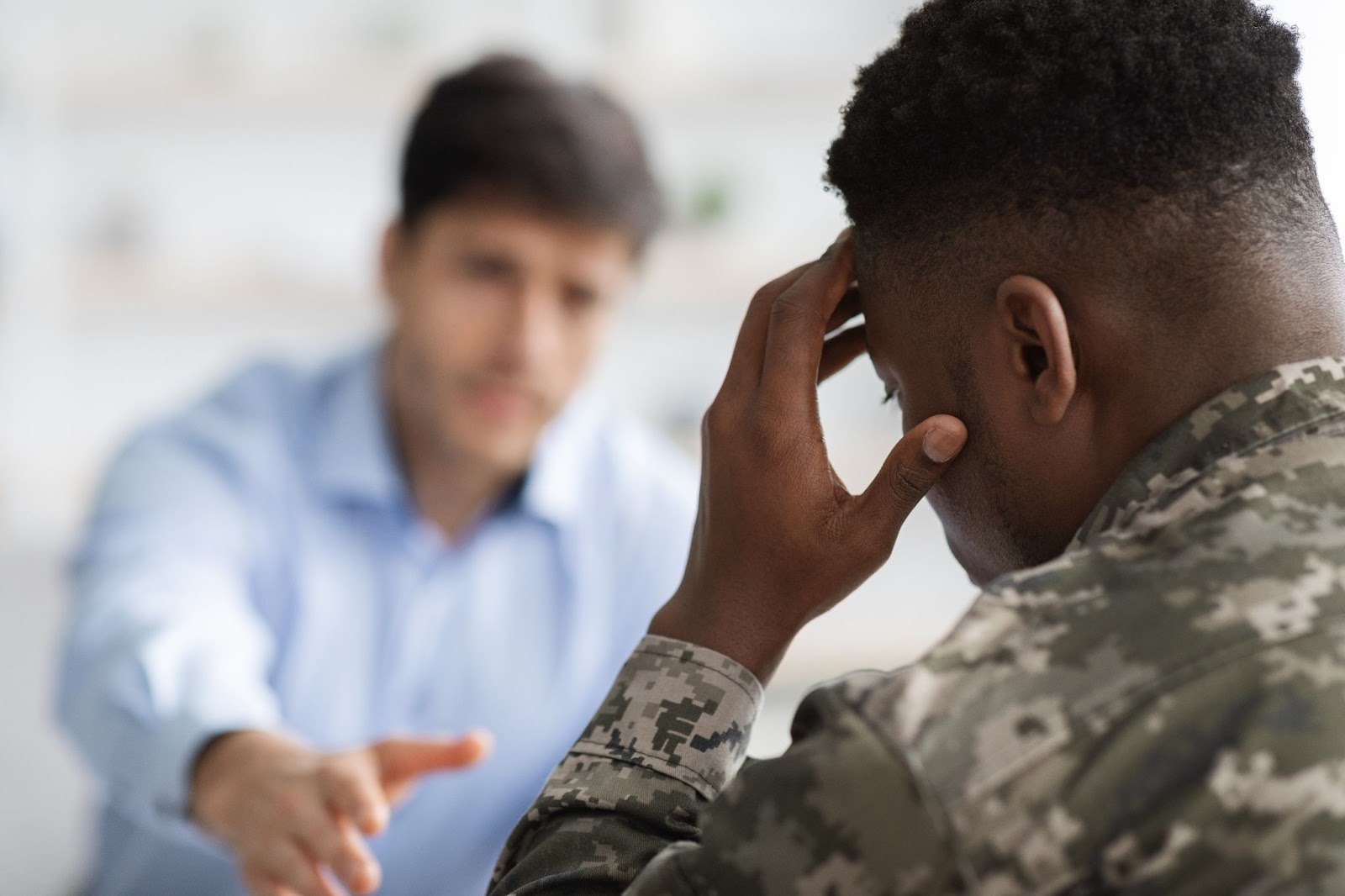
The Growing Need for Veteran Mental Health Services
All of this puts a large burden on veteran mental health organizations trying to provide increased access to mental support while maintaining the same high quality. Barriers to geography, limited mental health professionals, and stigma all continue to limit engagement.
In order to close the gap, organizations need to use scalable digital veteran mental health services, thereby increasing access while preserving a personal touch. A structured system that allows organizations to proactively support veterans while measuring their benefits and accountability to the organization.
The Power of Peer-to-Peer Counseling for Veterans
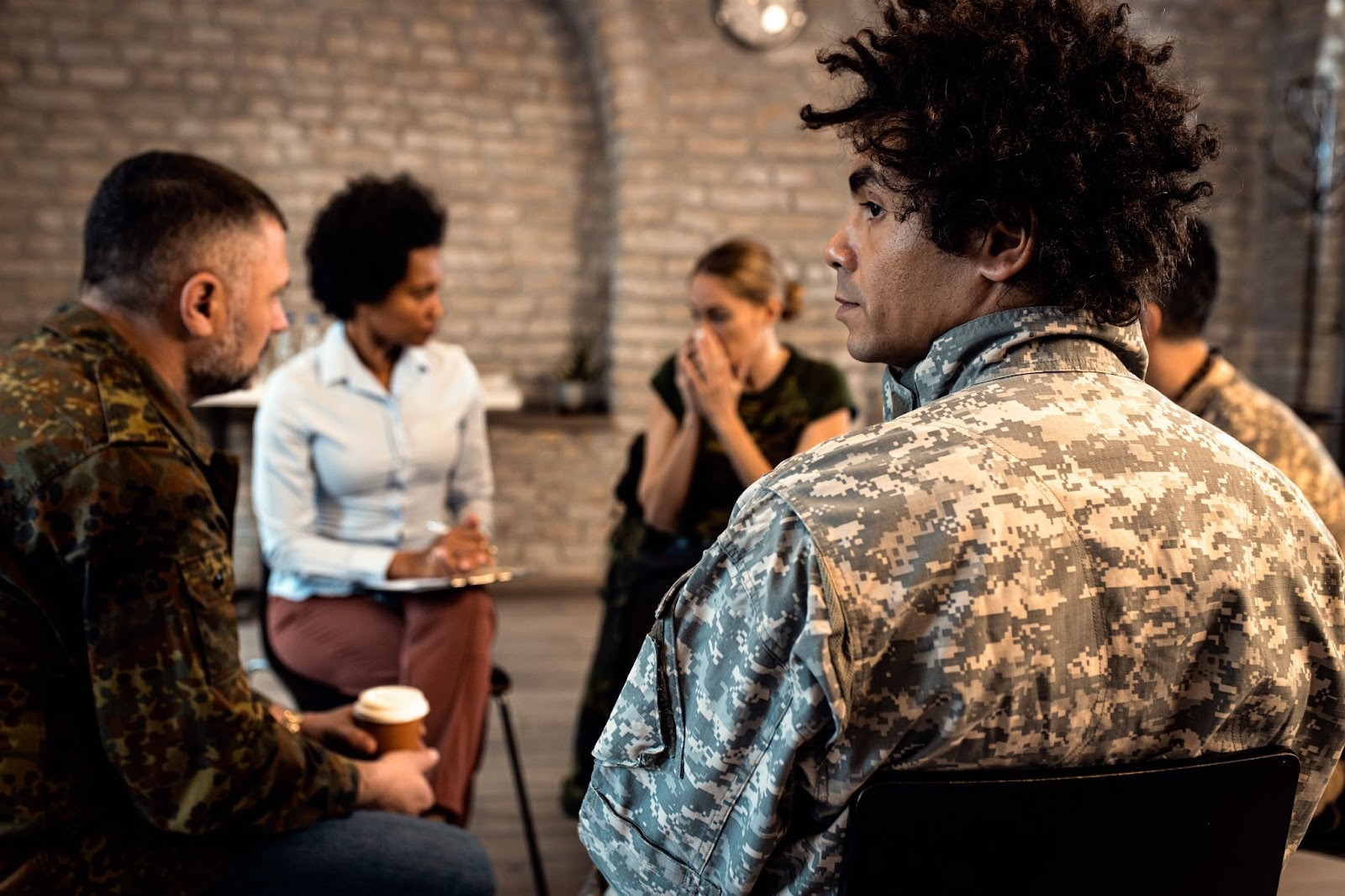
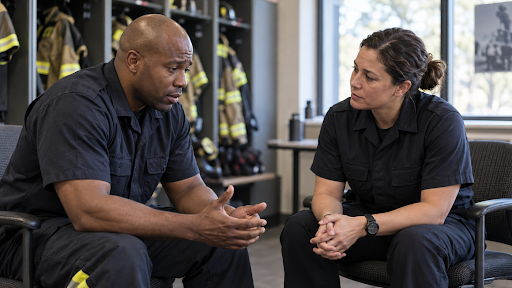
For veterans, trust often begins with shared experience. Peer to peer counseling for veterans works because it eliminates cultural barriers. Veterans understand the structure, language, and emotional realities of service without explanation. Rapport developing through shared lived life experience creates open communication.
Peer support for veterans can improve outcomes of:
- More people actively participating in programs
- Stronger community belonging
- Earlier identification of emotional issues
- Increased continuity with larger veteran mental health services
Peer to peer counseling for veterans is complementary to the clinical care system, where many veterans find success in moving to formal services through the use of peer counselors as links. Therefore, when used as a sustained strategy, it serves as a foundation for long-term veteran resilience programs.
A Holistic Approach to Veteran Wellbeing
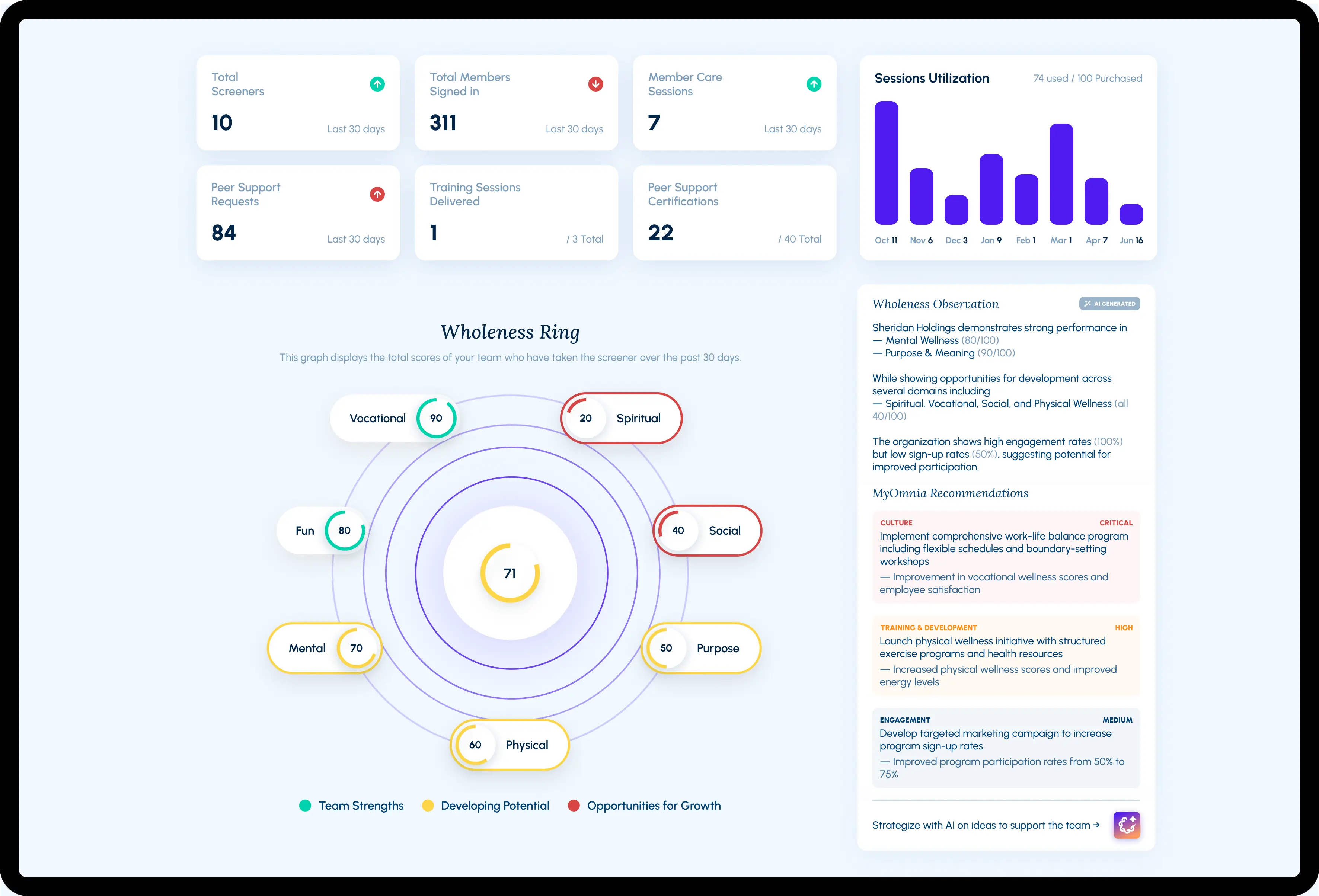
Effective veteran wellness programs must address the whole person that rebuilds mental, emotional, social, and purpose-driven health. Through the MyOmnia Wholeness Screener, organizations can assess the full spectrum of a veteran’s well-being, from emotional resilience to social connection and sense of purpose, ensuring that peer to peer counseling for veterans is personalized and data-informed.
The Wholeness Screener operates within a comprehensive digital mental health platform for veterans, allowing organizations to integrate structured assessment into their broader strategy. This enables:
- Early detection through proactive mental health screening for veterans
- Alignment of peer interventions with measurable well-being indicators
- Ongoing tracking of resilience metrics
- Data-driven reporting for leadership teams
Veteran mental health organizations have an opportunity to change their support strategies by embedding structured mental health screening for veterans into their peer initiatives, allowing them to shift from a responsive to a prevention-based model.
This type of holistic integration will improve the long-term effectiveness of veteran resilience programs and focus on maintaining a patient-centered approach.
Veterans and organizations can directly and confidentially test mental health by visiting the MyOmnia Wholeness Screener
Supporting Veteran Mental Health Organizations at Scale
There is a need for solutions to be scalable for nonprofits, VA-affiliated programs, government systems, and employers. MyOmnia serves as a strategic partner to veteran mental health organizations in their efforts to develop structured and customizable solutions. MyOmnia ecosystem supports:
- Secure digital accessibility across regions
- Customizable structured peer support programs for veterans
- Organizational dashboards for measurable oversight
- Community-building tools within a veteran peer support platform
- Integrated mental health screening for veterans
This infrastructure allows organizations to deliver consistent, high-quality veteran mental health services across populations, including rural veterans and employed veterans balancing civilian careers.
For nonprofits and VA-affiliated initiatives, scalable digital systems improve reporting transparency. Care coordination is strengthened for healthcare administrators. Organizations that hire veterans and provide peer support for veterans structured for their transition back into civilian life create a welcoming atmosphere and encourage retention.
Outcomes Organizations Can Expect
Organizations will achieve the following outcomes when they start utilizing this type of implementation framework for integrated peer to peer counseling for veterans with a measurable set of tools:
- Increased participation in veteran peer support programs
- Earlier intervention through effective mental health screenings for veterans at risk
- Stronger connections and reduced feelings of isolation
- Demonstrating measurable improvements in veteran resilience programs
- Precise reporting for senior-level executives
- Utilizing data-driven insight to improve and refine traditional veteran mental health services
This approach positions veteran mental health organizations as proactive leaders that focus on whole-person support, versus reactive crisis responders.
Ready to Strengthen Your Veterans’ Future?
The need for robust, scalable support systems that provide structure and alignment with your organization’s mission is significant. MyOmnia collaborates with veteran mental health organizations to enhance the delivery of veteran mental health services, structured peer to peer counseling for veterans with a digital mental health screening platform, and a whole-person strategy that utilizes measurable outcomes.
By leveraging the Wholeness Screener and using a digital mental health platform for veterans with structured peer support, organizations can increase the number of participants and expand their reach and engage more through a more sustainable means of providing quality programming based on measurable outcomes.
Veteran wellness programs require proactive strategies, discipline in support systems, and a commitment to building out long-term visions that support the success of our veterans.
FAQs
Q1: Why is peer to peer counseling for veterans so effective?
Ans. Because shared lived experience builds immediate trust. Peer to peer counseling for veterans increases engagement in broader veteran mental health services and reduces the stigma associated with seeking help.
Q2: How can veteran mental health organizations scale responsibly?
Ans. By implementing a digital mental health platform for veterans that integrates structured peer support programs for veterans, screening tools, and organizational dashboards, agencies can expand impact while maintaining oversight.
Q3: What is the role of mental health screening for veterans?
Ans. Proactive mental health screening for veterans can assist in early detection of an individual being at risk for negative outcomes and establish peer support for veterans in conjunction with tailored intervention strategies.
Q4: Can peer programs replace clinical veteran mental health services?
Ans. No. Structured veteran peer support programs are intended to enhance, rather than substitute for, clinical veteran mental health services, reinforcing a cohesive and comprehensive model of care.

.png)





.png)