
.png)



Introduction: The Invisible Budget Line No One Tracks
First responder agencies invest heavily in physical safety. Protective gear, training, and operational readiness are carefully budgeted and continuously optimized.
Psychological injury is not a side issue for first responders. It is a direct, measurable financial liability that quietly drains agency resources year after year. Up to 80 percent of first responders experience traumatic events on the job, yet most departments still treat mental health for first responders as a soft “wellness” conversation instead of the hard operational risk it actually is.
The Scale of Psychological Injury in First Responders
Roughly one in three first responders may develop PTSD during their career, a rate far higher than the general population. Prevalence varies by role, such as EMS providers often sitting around 19%, firefighters between 7 and 37 percent, and police officers in the same elevated range.
Repeated exposure to trauma is the daily reality, and the treatment gap is wide. Many cases go undiagnosed or untreated because the culture still equates asking for help with weakness that results in psychological injury moving from an individual burden to an agency-wide liability.
The Direct Financial Cost of Mental Health Conditions
PTSD drives healthcare spending that most agencies never isolate in their reports. A landmark 2022 study calculated the total excess economic burden of PTSD in the United States at $232.2 billion annually, or roughly $19,630 per person with PTSD.
For first responder agencies, those dollars show up in higher insurance claims, workers’ compensation payouts, and long-term care utilization. Comorbid conditions such as depression, substance use, and chronic physical health issues compound the expense.
The Hidden Operational Costs
The most significant financial impact often comes from operational disruption.
Absenteeism and Sick Leave
46.7% of first responders reported working while sick or injured to avoid using sick leave for mental health reasons. This presenteeism being physically present but not fully functional represents a hidden cost that’s rarely calculated but significantly impacts operations.
Reduced Productivity
Trauma impairs cognitive performance, decision-making speed, and situational awareness. It also results in measurable drops in work effectiveness, including higher error rates and slower response times under pressure.
Workforce Attrition
Affected first responders leave the profession earlier than planned because of mental health issues. Replacement costs are steep: recruiting, training, and bringing a new officer or firefighter to full productivity can exceed $189,000 when knowledge transfer and lost institutional memory are factored in
Increased Liability and Errors
PTSD is associated with impaired judgment that elevates incident risk, workers’ compensation claims, and potential legal exposure. Every preventable error carries both human and financial weight.
Burnout-Driven Turnover
37.4% of first responders had considered leaving their job due to stress or burnout, while 27.3% had considered early retirement for the same reasons. Firefighter burnout and EMS fatigue contribute significantly to workforce instability and replacement costs.
The Cost of Underutilized Mental Health Support Systems
Employee assistance programs (EAPs) exist in most agencies, yet traditional EAP utilization in high-stress fields like EMS and fire sits at just 2 to 5 percent annually. Only a small fraction of those who screen positive for depression or PTSD actually receive care.
Delayed care leads to higher downstream costs. Untreated cases escalate into disability claims, early retirements, and long-term absences. The biggest cost driver is not the price of treatment. It is an untreated psychological injury.

Cultural & Structural Barriers That Increase Cost
Stigma continues to shape behavior in high-stress professions. Up to 92 percent of firefighters in some surveys view help-seeking as a sign of weakness. In law enforcement, first responders endorse stigma around mental health care, with confidentiality fears and career-impact concerns topping the list.
Many are simply unaware of available resources or do not trust the system to protect their privacy. These barriers turn existing support systems into financially inefficient investments. Programs are funded, but they are not used. The result is higher downstream costs.
Agency-Level Financial Risk: The Bigger Picture
When these factors combine, the financial impact becomes systemic. Direct healthcare spending, absenteeism, turnover, productivity loss, and liability. Untreated psychological injury costs first responder agencies billions across the country every year when scaled nationally.
For leaders, the framing is clear. Psychological injury creates budget inefficiencies, reduces operational readiness, and increases legal and safety risks. It is no longer a human-resources conversation. It is a chief-officer and finance-director conversation.
Why Reactive Mental Health Models Are Financially Unsustainable
Most agencies rely on reactive systems. Support is activated after a crisis, often when the condition has already escalated. This model is inherently expensive.
By the time intervention occurs, the severity is higher, recovery takes longer, and the operational impact is greater. Limited-session support and lack of early detection further reduce effectiveness.
What a Cost-Efficient Mental Health Model Looks Like
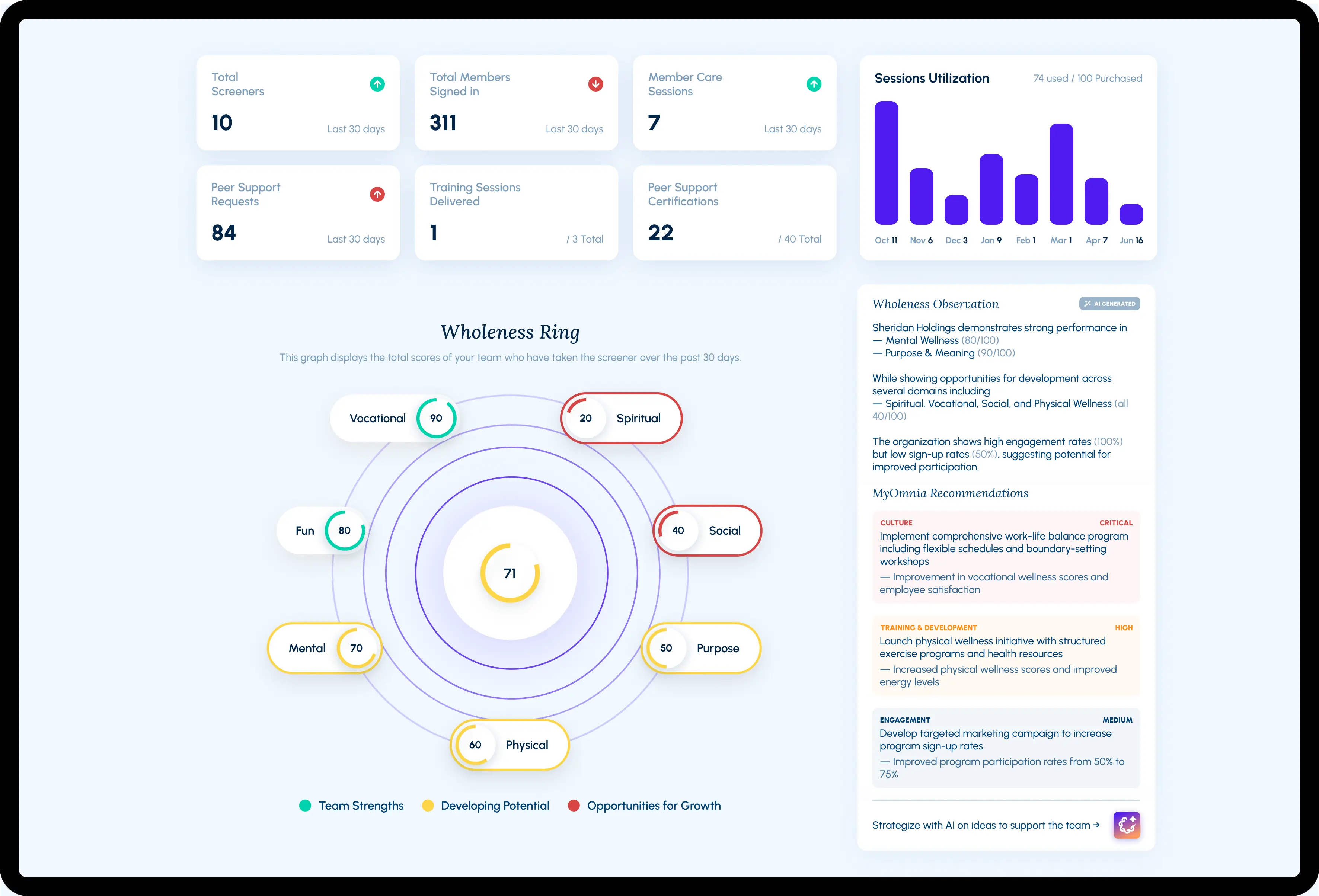
A cost-efficient model reframes mental health from a support function into a performance strategy. A modern model includes continuous monitoring, early intervention systems, role-specific psychological support, and leadership dashboards that show real-time risk without breaching confidentiality.
Early intervention demonstrably reduces severity and long-term costs while increasing program engagement and return on investment.
Prevention vs Cost: A Strategic Comparison
Responsibility: System vs Individual
There is often an expectation that individuals should take responsibility for managing stress and seeking help.
Organizations carry the duty to design effective, stigma-free systems, reduce barriers, and enable early detection. When agencies invest in the right infrastructure, responders are far more likely to use it.
Conclusion: The Cost of Doing Nothing Is the Highest Cost
Psychological injury is a major financial liability in first responder agencies. Current systems fail to address the real cost drivers, and leaders who treat mental health costs as someone else’s problem are simply deferring expenses to next year’s budget, next year’s overtime, or next year’s recruitment crisis.
Leaders must shift from reactive spending to preventive investment if they want to control long-term costs and maintain operational readiness.
Because the reality is simple, agencies that fail to modernize mental health systems are not saving money. They are accumulating hidden financial risk.

.png)







.png)